


TUCKER, Ga. — Avian influenza (AI), particularly highly pathogenic avian influenza (HPAI), continues to challenge the U.S. poultry and egg industry, representing one of the most significant threats to animal health, production stability, and economic sustainability. Since 2022, repeated HPAI outbreaks have devastated commercial and backyard flocks across the country, resulting in the loss of millions of birds, widespread production disruptions, rising egg prices, and substantial economic losses.
The persistence of these viruses in wild bird populations, combined with the increasing frequency of spillover events into domestic flocks, underscores the urgent need for more proactive, data-driven disease management strategies.
Despite the severity of the threat, current surveillance and response systems remain largely reactive. Poultry producers, veterinarians, and regulatory agencies often respond only after an outbreak occurs, leaving limited time to prevent disease spread and minimize economic impact.
In addition, the industry lacks a standardized, user-friendly, open-access tool to forecast AI risk in real time, a gap that continues to hinder proactive decision-making at both the farm and regional levels.
Recognizing this critical need, the U.S. Poultry & Egg Association (USPOULTRY) has funded research at the University of Georgia to develop an open-source, online platform capable of providing near real-time forecasts of AI risk across the United States. This initiative builds on previous work that developed deep learning algorithms to detect poultry diseases such as Salmonella, Newcastle Disease, and Coccidiosis.
By embedding these capabilities into mobile and web-based platforms, Dr. Guoming Li, principal investigator, has demonstrated that artificial intelligence can enhance early disease detection and support timely management decisions. This work provides a strong foundation for extending similar approaches to HPAI risk prediction.
The objective of the project is to deliver an accessible, scientifically robust tool that enables poultry producers, veterinarians, and industry stakeholders to visualize AI risk, identify potential outbreak hotspots, and make informed, evidence-based decisions before disease outbreaks occur.
Achieving this objective requires the integration of diverse datasets, including bird migration patterns, meteorological data, wetlands and open water locations, commercial poultry facility distributions, and historical outbreak records. By combining these complex data sources, the platform is designed to capture the dynamic factors that influence HPAI emergence and spread.
The research team employs advanced statistical and machine learning approaches, including spatial-temporal regression and ensemble forecasting techniques, to analyze these datasets. These methods enable the identification of key drivers of AI risk, the estimation of outbreak probabilities in specific geographic areas, and the modeling of interactions among environmental, ecological, and operational variables. Models are trained and validated using retrospective outbreak data, ensuring that predictions are grounded in historical evidence while remaining adaptable to changing conditions.
The resulting web-based platform will be interactive and user-friendly, allowing stakeholders to generate location-specific risk forecasts, visualize AI hotspots, and access downloadable data products to support management strategies. As an open-source tool, the platform emphasizes transparency, reproducibility, and broad accessibility across the poultry industry. By providing early warnings of elevated AI risk, the system is expected to enable producers to implement targeted biosecurity measures, increase surveillance in high-risk areas, and ultimately reduce the likelihood and impact of disease outbreaks.
This research aligns directly with the priorities of the U.S. Poultry & Egg Association in the areas of disease prevention and food safety. By equipping the industry with proactive, data-driven tools, the project aims to reduce the economic and production impacts associated with HPAI, limit disease spread, and strengthen the overall resilience of poultry operations across the United States.
Looking ahead, the long-term vision for this research extends beyond avian influenza. The risk forecasting framework has the potential to be adapted for other poultry diseases, contributing to the development of a more comprehensive and integrated disease management system for the industry.
This shift from reactive response to predictive and preventive strategies represents a significant advancement in how poultry health challenges are addressed.
As avian influenza remains an ongoing threat, the development of this forecasting platform marks an important step toward safeguarding poultry health, protecting economic stability, and advancing innovation in disease management. The industry’s ability to leverage data, artificial intelligence, and collaborative research efforts will play a critical role in shaping a more resilient and sustainable future for U.S. poultry and egg production.
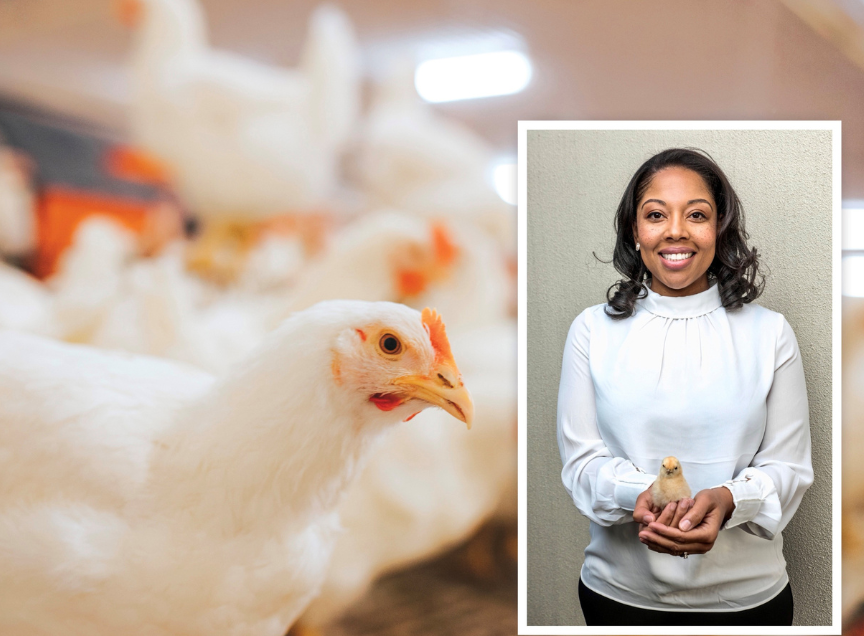
Dr. Denise Heard is vice president of research with the U.S. Poultry & Egg Association based in Tucker, Ga. She can be reached by e-mail at dheard@uspoultry.org.
