

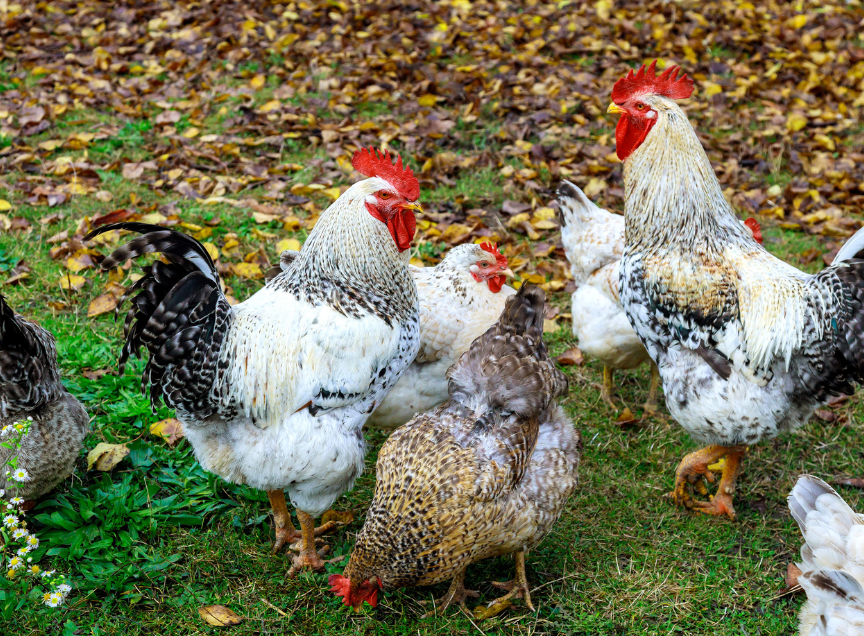

ATLANTA — The Centers for Disease Control & Prevention recently announced that, from Feb. 26 to March 31, 34 people were infected with the same strain of Salmonella Saintpaul across 13 states. Of the 34 people infected, only 13 have been hospitalized, and no deaths have been reported, but all of the cases have been linked to contact with backyard poultry, the CDC reports.
Backyard poultry flocks are usually a mix of chickens and ducks, and they can carry germs, like Salmonella, even if they appear healthy and clean.
Because of how easy it is for these germs to spread and this outbreak, the CDC is reminding backyard flock owners:
- Always wash your hands with soap and water immediately after touching backyard poultry, their eggs, or anything in the area where they live and roam.
- Don’t kiss or snuggle backyard poultry, and don’t eat or drink around them.
- Keep your backyard flock and the supplies you use to care for them outside of the house. You should also clean the supplies outside the house.
- Always supervise children around backyard poultry and make sure they wash their hands properly afterward.
- Children under the age of five shouldn’t handle chicks, ducklings, or other backyard poultry or spend time in areas where these animals live and roam.
The 13 states where the infected people live include Florida, Illinois, Indiana, Kentucky, Maine, Maryland, Michigan, Mississippi, New Hampshire, Ohio, Tennessee, West Virginia, and Wisconsin, with Michigan having the most infections at six people.
The states with the most infections are concentrated in the Midwest, but, other than location, there isn’t much of a pattern to this outbreak. State and local public health officials have interviewed people about the animals they came in contact with during the week before they got sick, CDC reports, and 79 percent of the people interviewed had contact with backyard poultry.
Additionally, 93 percent of the people who reported owning backyard poultry purchased or obtained said poultry since Jan. 1, 2026, the CDC reports. This is where the similarities end because everyone reported getting their poultry from different places.
However, investigators are continuing to gather information about where sick people obtained poultry and what hatcheries supplied to the retail stores where ill people purchased poultry, CDC noted.
Although the reported number of infections is 34, the CDC says that it’s likely that the true number of infections is higher than that, because many people recover without medical care, are not tested for Salmonella, and it takes 3 to 4 weeks to verify if a sick person is a part of an outbreak.
For any stores selling backyard poultry, the CDC is reminding them to source their chickens from hatcheries that have adopted the USDA’s best management practices to mitigate Salmonella contamination and those that voluntarily participate in the USDA National Poultry Improvement Plan U.S. Salmonella Monitored Program.
Additionally, they recommend:
- Cleaning and sanitizing poultry display areas between shipments of new poultry.
- Provide handwashing stations or hand sanitizers next to poultry display areas and tell customers to wash their hands right after leaving these areas.
- Display poultry out of reach of customers, especially children, so they cannot easily touch the poultry.
- Provide health information to owners and potential buyers of poultry before purchase.
For more information about Salmonella and this outbreak, visit the CDC website at www.cdc.gov.
