

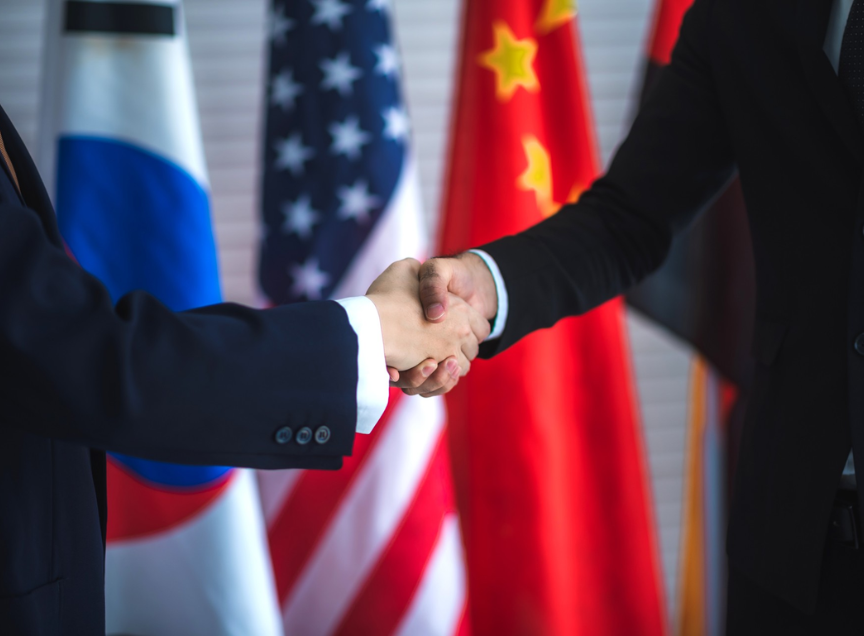

WASHINGTON — Within the previous couple of weeks, the Administration has announced many new reciprocal trade agreements and investments with several nations designed to open movement of American products overseas, including American agriculture.
· Taiwan
In the most recent trade deal, announced on Feb. 12, Taiwan is agreeing to break down tariff and non-tariff barriers for U.S. agricultural exports. Regarding non-tariff products, Taiwan is committing to resolving barriers to agricultural exports of such products as poultry, beef, pork, and processing potatoes.
“The Agreement on Reciprocal Trade with Taiwan will eliminate tariff and non-tariff barriers facing U.S. exports to Taiwan, furthering opportunities for American farmers, ranchers, fishermen, workers, small businesses, and manufacturers,” U.S. Trade Representative Jamieson Greer said in the announcement. “This Agreement also builds on our longstanding economic and trade relationship with Taiwan and will significantly enhance the resilience of our supply chains, particularly in high-technology sectors. I want to thank my counterparts from Taiwan for their strong commitment to achieving fair and balanced trade with the United States.”
Trade groups add that this accord with Taiwan also addresses poultry health issues, like bird flu, which have hindered trade.
The USA Poultry & Egg Export Council notes that this agreement, “… will reduce regionalization restrictions imposed by Taiwan in the wake of findings of highly pathogenic avian influenza (HPAI) in the U.S. to the county level in which the affected premises is located, instead of the state level, significantly limited the impact. In addition, the agreement also calls for the elimination of tariffs imposed by Taiwan on turkey and egg product imports from the U.S., and a reduction in the tariff on U.S. duck imports to 10 percent from 30 percent.”
The council also added that through the agreement, U.S. chicken tariffs with Taiwan will remain at 20 percent.
“This is a big win for our country,” Greg Tyler, USAPEEC president and CEO, said in a statement. “Adopting county-level regionalization ensures a more science-based approach to HPAI and minimizes unnecessary trade disruptions, while the tariff eliminations and reductions create new opportunities for U.S. producers. We commend the Trump Administration and USTR for securing this strong outcome for U.S. poultry and eggs.”
· India
Earlier in February, the U.S. and India announced an interim trade agreement that seeks to reduce tariffs on a range of U.S. food and agricultural products including animal feed, grains, and soybean oil.
The USTR office notes that removing trade barriers with India, it opens trade for U.S. products to a nation of more than 1.4 billion people.
“President Trump’s dealmaking is unlocking one of the largest economies in the world for American workers and producers, lowering tariffs for all U.S. industrial goods and a wide array of agricultural products,” Greer said, adding that this announcement, “demonstrates the deepening ties between the United States and India as we create new opportunities for farmers and entrepreneurs in both countries.”
· North Macedonia
The administration has also announced a framework for a reciprocal, fair and balanced trade agreement to further a bilateral economic partnership with North Macedonia.
North Macedonia is a landlocked nation of more than 1.8 million people in southeastern Europe, which is bordered by Greece, Albania, Bulgaria, Kosovo, and Serbia.
Among the terms of this framework agreement include the elimination of custom duties of U.S. agricultural and industrial goods that are exported to North Macedonia.
“President Trump’s trade agenda is deepening our transatlantic ties with a key partner in the Balkan region,” Greer said. “This announcement lays the groundwork for an Agreement on Reciprocal Trade to enhance our economic partnership while removing red tape for American farmers and producers.”
· Bangladesh
A reciprocal trade agreement between the United States and the People’s Republic of Bangladesh was also agreed upon in February. The administration notes that this accord will provide exporters of both nations “unprecedented access to each other’s respective markets.”
Located in South Asia, Bangladesh is the eighth-most populated nation with more than 171 million people. It is bordered by India and Myanmar.
Bangladesh is agreeing to provide preferential market access for U.S. agricultural and industrial goods. This includes U.S. poultry, beef, dairy products, and soy products. The U.S. is reducing the reciprocal tariff rate, originally set in April 2025, to 19 percent on Bangladesh originated goods and identify products that will receive a zero percent reciprocal tariff rate. Included in the agreement is also the purchase by Bangladesh of $3.5 billion of U.S. agriculture products including corn, soy, wheat, and cotton.
“Today’s signing of the Agreement on Reciprocal Trade with Bangladesh is the first in South Asia and marks a meaningful step forward in opening markets, addressing trade barriers, and creating new opportunities for American exporters,” Greer said in the Feb. 9 announcement. “I commend Bangladesh’s Commerce Adviser Sheikh Bashir Uddin for his constructive engagement to achieve a more balanced and reciprocal trading relationship.”
· Argentina
The U.S. has also recently announced an agreement to a framework for a reciprocal trade and investment deal with Argentina.
Through this trade deal, Argentina is to provide preferential market access for U.S. goods including a variety of agricultural products, notably poultry.
“Argentina will allow access for U.S. poultry and poultry products, within one year, and simplify red tape for U.S. exporters of beef, beef products, pork and pork products,” the White House said in an agreement fact sheet. “Argentina also has agreed to protect U.S. exporters’ use of certain meat and cheese terms, preserving market access and creating the potential for new opportunities in the region.”
Working toward future trade with Argentina, the administration added that the U.S. will provide Most Favored Nation tariff treatment on products contained in the listing of potential tariff adjustments.
“The deepening partnership between President Trump and President (Javier) Milei serves as a model of how countries in the Americas, from Alaska to Tierra del Fuego, can advance our shared ambitions and safeguard our economic and national security,” Greer said in his Feb. 5 announcement.
“The U.S.-Argentina Agreement lowers longstanding trade barriers and provides significant market access for American exporters, ranging from motor vehicles to a wide array of agricultural products,” Greer added. “I thank Argentina’s Minister Pablo Quirno for his commitment to achieving a stronger, more balanced partnership.”
