


PARIS — In its inaugural report on “The State of the World’s Animal Health,” the World Organization for Animal Health takes an in-depth look at the current situation of animal diseases, with a section focusing on highly pathogenic avian influenza, and specifically into the use of vaccines.
This first report of its kind from WOAH was presented by the organization for the 92nd General Session of the World Assembly.
“Animal diseases know no borders,” Dr. Emmanuelle Soubeyran, WOAH director general, states in the report’s foreword. “Whether affecting livestock, wildlife or aquatic species, their impact can be devastating — threatening livelihoods, public health, food supply chains, international trade and biodiversity. Our ability to prevent, detect and respond to these threats depends on robust surveillance, strong veterinary services, and the effective implementation of science-based policies.”
A core aspect of this report, Soubeyran added, is to focus on the use of vaccinations in the control and prevention of animal diseases.
“From eradicating deadly diseases like rinderpest to controlling threats such as rabies, foot and mouth disease and avian influenza, vaccines remain a powerful tool at our disposal,” Soubeyran notes. “Yet, access to vaccines remains uneven, and challenges persist in vaccine research, production, distribution and uptake. Strengthening global cooperation and ensuring equitable access to safe, effective vaccines, alongside other control measures must be a priority for all of us.”
The global cooperation aspect is a key concern. Some nations, such as China and France, has adopted vaccination campaigns for HPAI control, especially in regard to laying hens.
In the WOAH report, Julian Madeley, World Egg Organization director general, notes that vaccination programs for egg layers could prove to be useful in the control of bird flu. Madeley uses the Newcastle disease response as a prime example for virus control.
“Once we had effective vaccination strategies, it became a manageable problem,” Madeley added. “Outbreaks still occur, but they no longer devastate the industry as they once did. We believe the same can happen with HPAI if vaccination is widely adopted alongside robust surveillance measures.”
Communication and collaboration are needed as the industry goes forward, Madeley said, adding that, “We need to continue advocating for vaccination as an additional tool, complemented by biosecurity and surveillance. And we must ensure that best practice tools are made available to farms so that they can carry out these measures effectively.”
Vaccinating wild birds?
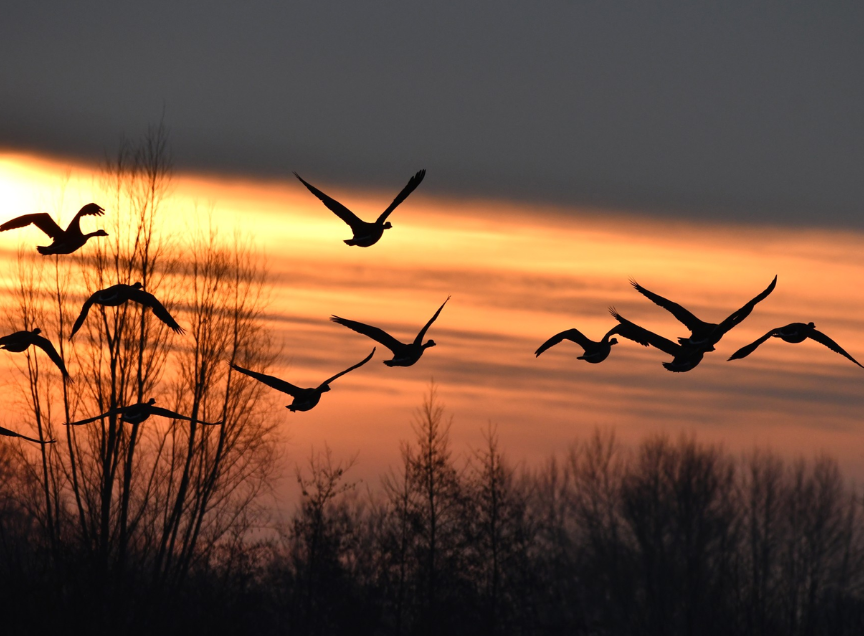
A known source for the spread of HPAI has been waterfowl and migrating wild birds.
The reach of the disease since the current outbreak started has been seen in commercial poultry, backyard flocks, other bird species, mammal species, domesticated pets, and dairy cattle.
But would a vaccination program for wild birds assist in stopping the bird flu spread? Also, would such a process even be feasible?
The WOAH report notes that “… attempting to vaccinate wild birds against avian influenza at scale presents significant challenges. Difficulties include the ability to capture the wild birds with consideration for bird and human safety and welfare, the selection of suitable vaccine strains and dosages, the logistics and resourcing in administering the vaccine to each individual bird and how to reliably track and monitor vaccinated individuals.”
More productive alternatives to a wild bird vaccination plan would be the continued efforts of biosecurity initiatives, removal of dead birds when safe, habitat protections, monitoring, as well as working toward restricting interactions between wild birds and domestic birds, the organization reports.
In December 2023, WOAH released another report that considered emergency vaccination of wild birds against HPAI in specific situations. Among these specific situations, according to WOAH, would be when critically endangered species, especially those facing extinction are threatened; vaccine may be needed if a threat is posed to domestic poultry or other wild birds along migratory routes or with dense populations; if culling, biosecurity and other means are impractical, vaccines could supplement; if a local outbreak would potentially have a devastating effect on a wild bird population; or if a species that plays a critical ecological role is vulnerable to an outbreak.
“In such cases, should vaccination be considered, it must be carefully thought out as part of a broader coordinated response plan that includes risk assessment, surveillance, and consultation with relevant experts and stakeholders,” the WOAH report says. “Alignment with WOAH international standards and a commitment to monitoring must also be emphasized when considering the deployment of emergency vaccination.”
This HPAI outbreak, which began in 2022, has had a tremendous impact on poultry production, and has shown to jump species and not follow seasonal or regional influenza patterns. Health officials worldwide are looking into all means, even non-traditional means, for control of the disease.
“The scale and complexity of this ongoing epizootic require urgent action beyond traditional control measures,” the report added. “These remain essential, but the relentless spread of the virus, despite aggressive containment efforts, demonstrates that more must be done.”
