

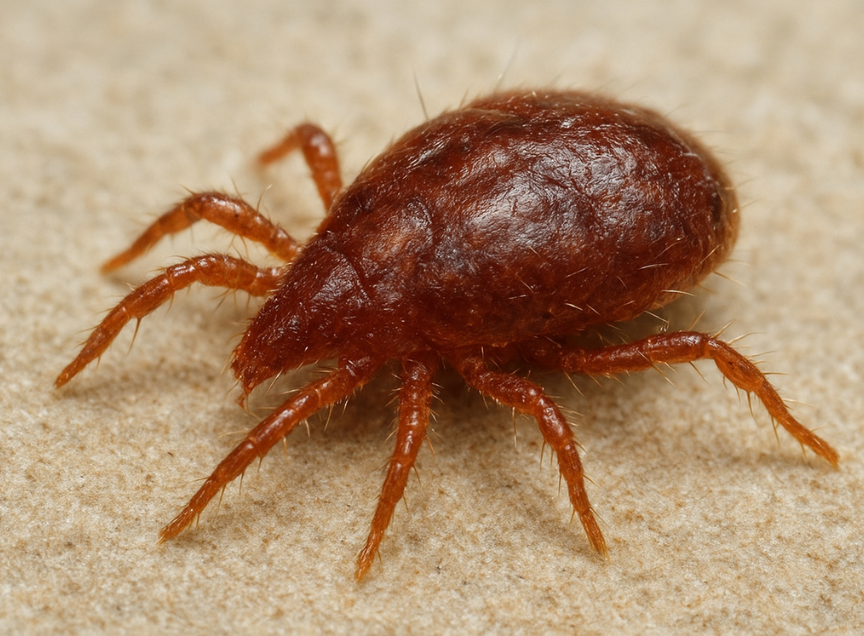

UNIVERSITY PARK, Pa. — The U.S. Food and Drug Administration recently approved the first oral treatment to remedy the problem of northern fowl mites in laying hens and replacement chickens. Northern fowl mites are blood-feeding parasites that can result in health problems and lower egg production in chickens and other poultry.
The treatment, Exzolt, can be added to the birds’ drinking water and works by targeting the parasites’ nervous system. Exzolt received its FDA approval after being assessed by a team of researchers at Pennsylvania State University’s College of Agricultural Sciences.
Erika Machtinger, a Penn State associate professor of entomology and a researcher on the project, noted that Exzolt is unique because of its oral delivery method.
“Current treatments are all topical, and additionally, mites have developed resistance to many of their active chemicals,” Machtinger said. “This new treatment is a veterinary-prescribed drug that works systematically, so it gets to all parts of the bird.”
Additionally, the oral delivery method of Exzolt reduces the stress associated with other treatment methods and minimizes exposure to chemical sprays for workers and birds.
Although Merck Animal Health initially developed the product, it had to go through a rigorous study process to be approved for use in the U.S. The process began at the University of California-Riverside, before Merck named Penn State as an additional testing site.
In the end, researchers found that treated birds had more than 90 percent reduction in mites, as compared to untreated birds. The results were then sent to the FDA for final review and approval. In this final review, the FDA confirmed that:
- Exzolt is safe and effective in laying hens and replacement chickens.
- Any residues in edible tissues or eggs from birds treated with Exzolt will not present any public health concerns when used according to the label.
- And there are no adverse effects to the bird’s reproductive performance or offspring viability.
Although Exzolt is safe for poultry, any person administering it should wear protective gloves and avoid contact with skin and eyes when handling the product.
