


ATLANTA — The Centers for Disease Control & Prevention recently updated its ongoing Salmonella outbreak investigation linked to backyard poultry. Since the previous update on April 23, 150 new cases have been reported, and two additional strains have been added to the outbreak, Salmonella Enteritidis and Salmonella Mbandaka.
Although two new strains have been added to the outbreak, the original strain, Salmonella Saintpaul, is responsible for the most infections at 133 people, CDC reports.
In addition to the 150 new cases, there have been 40 new hospitalizations, 1 death, and the outbreak has spread to 18 new states, including Georgia where four people reported sickness related to this outbreak, CDC reports. The one reported death came from the state of Washington.
The other states with new cases include California, Colorado, Idaho, Iowa, Massachusetts, Minnesota, Missouri, Montana, Nevada, New York, North Carolina, Oregon, Pennsylvania, Texas, Utah, Vermont, and Washington, with Kentucky having the most cases at 22 people, CDC reports.
States with the largest number of sick people are mainly concentrated in the Midwest, but this outbreak is quickly spreading from coast to coast.
One of the most jarring statistics to come out of this outbreak is that more than a quarter of the reported sick people are children under the age of five, CDC reports. It’s because of this that the CDC is reaffirming that children should always be supervised around backyard poultry and that children under the age of five shouldn’t handle backyard poultry of any kind or spend time in areas where the poultry live or roam because of young children’s susceptibility to the bacteria.
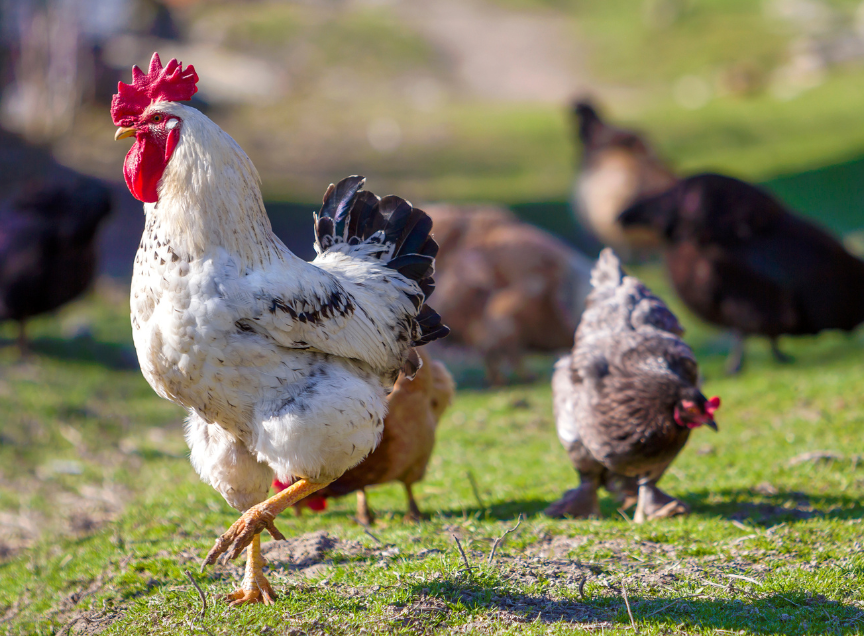
The types of poultry in these backyard flocks causing the outbreak include chicken and ducks. In fact, CDC reports that, of the 65 patients with Salmonella Saintpaul infections, 78 percent reported having chicks or chickens and 54 percent reported having ducklings or ducks.
More than half of the patients with the necessary information specified that they had Pekin ducks. This revelation led to the deeper discovery that patients included in the Salmonella Saintpaul outbreak have more frequently reported contact with ducklings or ducks, specifically Pekin ducks, versus other outbreaks where most patients reported contact with chicks or chickens, CDC reports.
With all of the investigating being done to find the underlying cause of this outbreak, the CDC was able to trace all three strains of Salmonella to five different hatcheries. The hatcheries have not been named, but the CDC is working with state partners to notify the hatcheries and assess any links to upstream suppliers.
As this outbreak continues, the CDC reminds everyone to:
- Always wash your hands with soap and water for 20 seconds after touching birds, their supplies, or collecting eggs.
- Use a pair of dedicated shoes or boots for your coop and don’t wear them inside your house.
- Keep birds and supplies outside the house to prevent spreading germs inside.
For more information about this outbreak, visit the CDC website at www.cdc.gov.
