

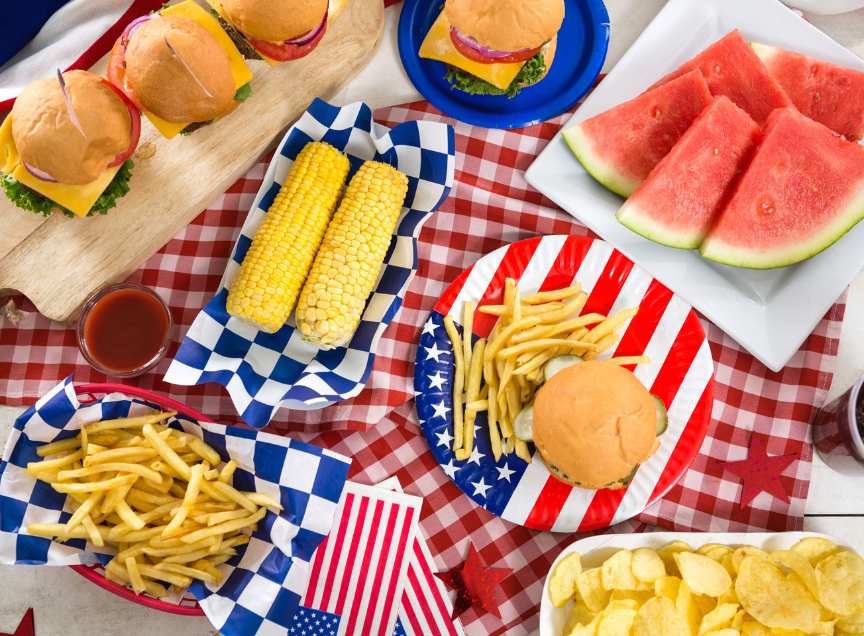

WASHINGTON — Leading up to the nation celebrating its 250th anniversary during this year’s Fourth of July weekend, consumers and producers were taking a close look at food prices, especially meat prices that impact the annual holiday cookouts.
In its annual Summer Cookout Cost Survey, the American Farm Bureau Federation reported that for this Independence Day a cookout for 10 people would amount to approximately $73.82, or $7.38 per person. This is a 4 percent increase, $2.90 up, from 2025.
“Families across the country are dealing with higher prices for many expenses including groceries,” Dr. Faith Parum, AFBF economist, said in the federation’s announcement. “As you look at the purchasing power of the dollar, however, it has remained relatively stable when it comes to food. America’s families spend less of their disposable income on food than most other nations and we enjoy one of the most abundant, affordable and safe food supplies in the world.”
AFBF notes that among the Fourth of July food items and their average 2026 costs, include:
- 2 pounds of chicken breast, $8.06 (up 3.5 percent).
- 2 pounds of ground beef, $14.06 (up 5.5 percent).
- 3 pounds of pork chops, $14.79 (up 4.7 percent).
- 1 pound of cheese, $3.60 (up 1.7 percent).
- 1 package of hamburger buns, $2.53 (up 7.7 percent).
- 32-ounce container of pork and beans, $3.06 (up 13.8 percent)
- 16-ounce bag of potato chips, $4.76 (down 0.8 percent).
- 2.5 pounds of homemade potato salad, $2.91 (down 17.8 percent).
When looking at a couple of these items, Farm Bureau adds that higher costs associated with aluminum can production contributed to the increase in pork and bean prices.
And regarding the nation’s egg industry, lower egg prices this year have led to the decrease in the cost to make homemade potato salad.
“Lower egg prices were a major factor, as egg-laying flocks have recovered considerably from highly pathogenic avian influenza, which drove egg prices to historic highs in recent years,” AFBF said in its report. “Four eggs now cost 71 cents, down from $1.34 last year. Lower potato prices helped decrease the cost of both potato salad and potato chips.”
Current beef prices have consumers concerned as it is most definitely an item that is popular for the nation’s grilling season.
Beef ranchers are facing several obstacles such as herd size, drought conditions, and increased input costs.
“The U.S. cattle herd is at its lowest level since 1951,” the Meat Institute said in a report. “Years of drought across key cattle-producing regions, combined with rising feed costs and the long biological timelines involved in herd rebuilding, have left the country with considerably fewer cattle to satisfy consumer demand for beef. That supply-demand imbalance is the primary driver of what families are experiencing at the grocery store.”
The Meat Institute adds that a lot of the costs associated with the current situations are being absorbed by meat processors. “The increases consumers are seeing are driven by supply constraints at the ranching level and by retail pricing dynamics, not by processing profits. Meat and poultry processing is a capital-intensive, low-margin business that regularly posts losses alongside its better years.”
Farm Bureau adds that, “even in a challenging farm economy, farmers and ranchers remain committed to producing a safe, affordable and abundant food supply. But keeping that food supply strong will require support and stability.”
“Higher prices at the grocery store don’t always translate to more money for farmers,” Zippy Duvall, AFBF president, said. “The farmer’s share of the food dollar is around 6 percent after expenses. Farmers are dealing with natural disasters and higher supply costs while making the same — or sometimes less — money for the food they grow. Still, they’re committed to growing safe, affordable, sustainable and abundant food for our nation.”
Duvall also noted the importance that agricultural producers have for the nation, as well as the need for an updated farm bill.
“Farmers represent less than 2 percent of the population, but they carry a great responsibility in providing nutrition for the remaining 98 percent of America,” he added. “The critical role they play has traditionally been supported by investments in innovation, research and risk management, all made possible by the farm bill. We encourage lawmakers to celebrate America’s 250th anniversary and then return to D.C. with a renewed commitment to pass a new, modernized farm bill. It’s an investment in our country’s future.”
