

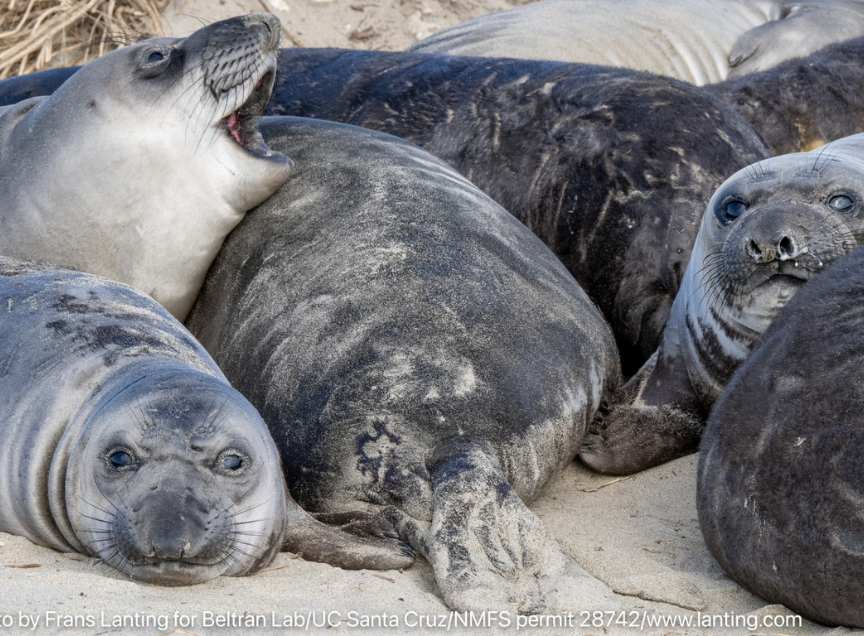

SANTA CRUZ, Calif. — Researchers with the University of California, as well as the USDA, have recently confirmed highly pathogenic avian influenza in seven weaned northern elephant seal pups at California’s Año Nuevo State Park.
This confirmation marks the first cases HPAI H5N1 in California marine mammals, and the first detections of the virus in the northern elephant seal species, the university reported in its announcement, adding that bird flu wreaked havoc in Argentinian southern elephant seals in 2023.
“This is exceptionally rapid detection of an outbreak in free-ranging marine mammals,” Christine Johnson, director of the Institute for Pandemic Insights with the UC Davis Weill School of Veterinary Medicine, said in a statement. “We have most likely identified the very first cases here because of coordinated teams that have been on high alert with active surveillance for this disease for some time.”
Año Nuevo State Park, which is located just north of Santa Cruz, Calif., is a noted home for northern elephant seals which sees its population rise to about 5,000 during the winter breeding season. The university adds that about 1,350 were at the park when the outbreak was detected. California State Parks have closed the park’s seal viewing areas temporarily, and tours have been cancelled for the rest of this season so officials can continue to monitor the wildlife health threat and curb the spread of the disease.
Stemming from concern over the spread of bird flu in recent years, researchers at UC Davis and UC Santa Cruz have increased their surveillance in the state’s seal population.
“Given the catastrophic impacts observed in related species, we were concerned about the possibility of the virus infecting northern elephant seals for the first time, so we ramped up monitoring to detect any early signs of abnormalities,” Roxanne Beltran, UC Santa Cruz professor in ecology and evolutionary biology, said.
Beltran’s UC Santa Cruz laboratory leads a research program with northern elephant seals at Año Nuevo State Park. This research team collected samples from sick and dead seals earlier in February, which were taken to UC Davis for testing at the California Animal Health and Food Safety Laboratory System. The lab’s initial positive results for HPAI were also confirmed by the USDA’s National Veterinary Services Laboratory.
University of California researchers have been testing marine birds and mammals for more than two years and note that they will continue to work with other agencies all along the state’s coast in monitoring for disease in marine wildlife.
“We are cautiously optimistic, as most of the adult females had already departed the beach for their routine migrations before the outbreak began, and most seals on the colony seem healthy,” Beltran added.
Poultry
For 2026, HPAI detections in California poultry, the California Department of Food and Agriculture report the following: On Feb. 9, a confirmation in a commercial flock in Sonoma County. On Jan. 30, a backyard flock confirmation in Sutter County. And on Jan. 2, a confirmation in a commercial game bird flock in Butte County. The California outbreaks impacted approximately 86,690 birds.
Nationally, the USDA Animal and Plant Health Inspection Service reported on Feb. 27, that for the previous 30 days there have been 59 confirmed flocks across the U.S. This includes 32 commercial flocks and 27 backyard flocks, and amounts to about 9.68 million affected birds.
