

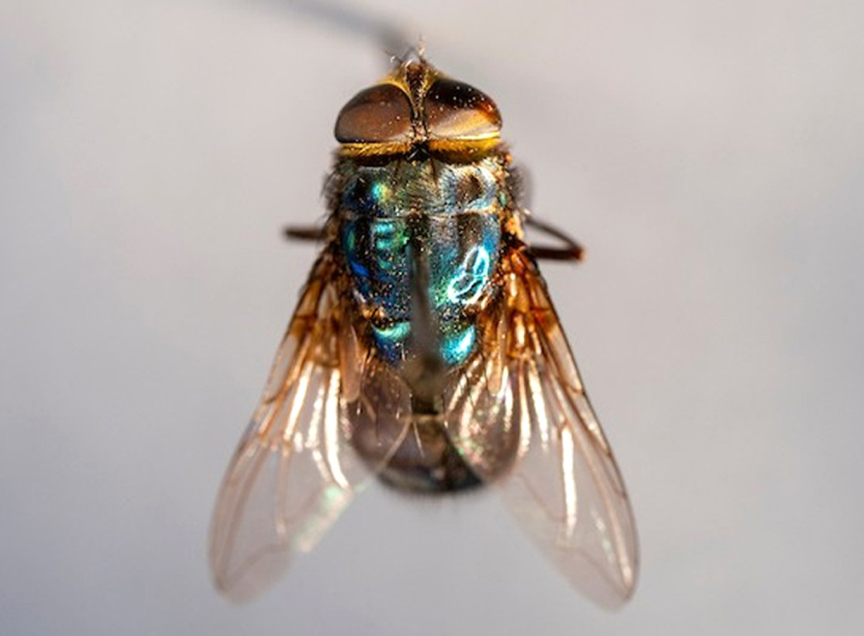

COLLEGE STATION, Texas — Texas A&M University’s AgriLife will receive part of $105 million in research funding announced by the USDA to bolster the nation’s defenses against New World screwworm (NWS).
USDA launched the NWS Grand Challenge earlier this year, calling for innovators from federal and non-federal entities to help prevent the spread of NWS by developing high-impact projects to enhance detection, control, and eradication readiness. On June 17, it announced funding for 40 breakthrough research projects.
Texas A&M AgriLife was selected to lead seven proposals and contribute to seven additional projects from the 226 applications. Projects were selected based on their innovative approaches, scientific gold standards and their potential to make a significant impact on the prevention and response to NWS.
In addition to the 40 projects announced, Texas A&M AgriLife Research is already conducting a separate USDA-funded Grand Challenge project assessing the feasibility, efficacy and operational readiness of electron beam, eBeam, technology as a non-radioactive alternative to cobalt-60 gamma irradiation for sterilizing NWS pupae in sterile insect technique programs.
“These projects reflect the strength of our Texas A&M AgriLife teams and their commitment to protecting animal health and supporting Texans,” Dr. Jeffrey W. Savell, Texas A&M University vice chancellor and dean for Agriculture and Life Sciences, said.
“By uniting innovation with purpose, we’re building the tools that protect livestock, safeguard our food systems and strengthen the resilience of every community that depends on them,” G. Cliff Lamb, AgriLife Research director, said. “This work reflects our commitment to science that serves, providing solutions that defend animal health today while preparing Texas and the nation for the challenges ahead.”
The Grand Challenge focuses on four core priorities:
- Enhance sterile NWS fly production to improve program efficiency and capacity.
- Develop novel NWS traps and lures to modernize detection and early warning systems.
- Advance NWS therapeutics and treatments to reduce animal health impacts and strengthen response capability.
- Develop tools that bolster preparedness and response, including repellents, ecological modeling, wildlife surveillance, or other innovative approaches.
Texas A&M AgriLife projects funded
Projects that enhance sterile NWS fly production announced in Texas A&M University’s College of Agriculture and Life Sciences, College of Engineering and College of Veterinary Medicine and Biomedical Sciences are.
Sterile fly production
- Dr. Keyan Zhu-Salzman, AgriLife Research entomologist and professor in the Department of Entomology — Maximizing sterile insect technique efficacy via optimizing electron beam irradiation conditions for screwworm control. AgriLife Research leads this project.
Therapeutics and treatments
- Dr. Guilherme Gomes Verocal, associate professor in the Department of Veterinary Pathobiology — Applying lessons from the Honduras New World screwworm outbreak to strengthen U.S. preparedness. AgriLife Research leads this project.
- Dr. Junqi Song, AgriLife Research plant immunity scientist and associate professor in the Department of Plant Pathology and Microbiology, located at the Texas A&M AgriLife Research and Extension Center at Dallas — Development of a nanomaterial-enabled dsRNA biopesticide for sustainable control of New World screwworm. AgriLife Research leads this project.
Preparedness and response tools
- Dr. Phillip Kaufman, department head, Department of Entomology — Investigating plant and vertebrate encounters in addition to potential biological controls of New World screwworm. Department of Entomology leads this project.
- Dr. Sapna Dass, AgriLife Research microbial ecology scientist and assistant professor, Department of Animal Science — Sentinel surveillance and rapid molecular confirmation for New World Screwworm across livestock. AgriLife Research leads this project.
- Sushil Paudyal, associate professor of dairy science, Department of Animal Science — Early wound detection using AI-enabled, multimodal New World screwworm surveillance on beef and dairy operations. AgriLife Research leads this project.
- Dr. Dzmitry Kurouski, Texas A&M AgriLife Institute for Advancing Health through Agriculture member and associate professor, Department of Biochemistry and Biophysics — Non-invasive and non-destructive sensing of screwworm larvae and larval sex determination. Texas A&M AgriLife leads this project.
For more information on TAMU’s research, visit https://agrilifetoday.tamu.edu.
Kay Ledbetter is communications coordinator for Texas A&M AgriLife.
