


GAINESVILLE, Ga. — Industry experts and stakeholders came together recently for this year’s Georgia Layer Conference. Organized by the University of Georgia’s Department of Poultry Science, this year’s conference was held virtually on Zoom for guests to easily attend.
According to Dr. Lilong Chai, UGA associate professor and conference coordinator, there were about 280 registrations from more than 20 countries for this conference. A total of 11 speakers presented on various topics related to the layer industry.
Mike Giles, Georgia Poultry Federation president, kicked off the conference with an update about the GPF. He highlighted the federation’s ability to get additional funding for the Georgia Poultry Laboratory Network.
“That funding is going to support the improvement in their laboratory information management systems,” Giles said. “Their systems that allow them to manage information provided, sample results, and other information [for] poultry companies, so they can continue to do business, export across state lines and internationally, and also monitor the health of the industry as the lab does so well.”
Giles also briefly spoke about HPAI and a few housekeeping updates about the federation.
Todd Applegate, UGA professor and Poultry Science department head, and Casey Ritz, UGA Poultry Science Extension coordinator, also gave updates about the Department of Poultry Science and the Extension before the presentations officially started.
Quality and safety
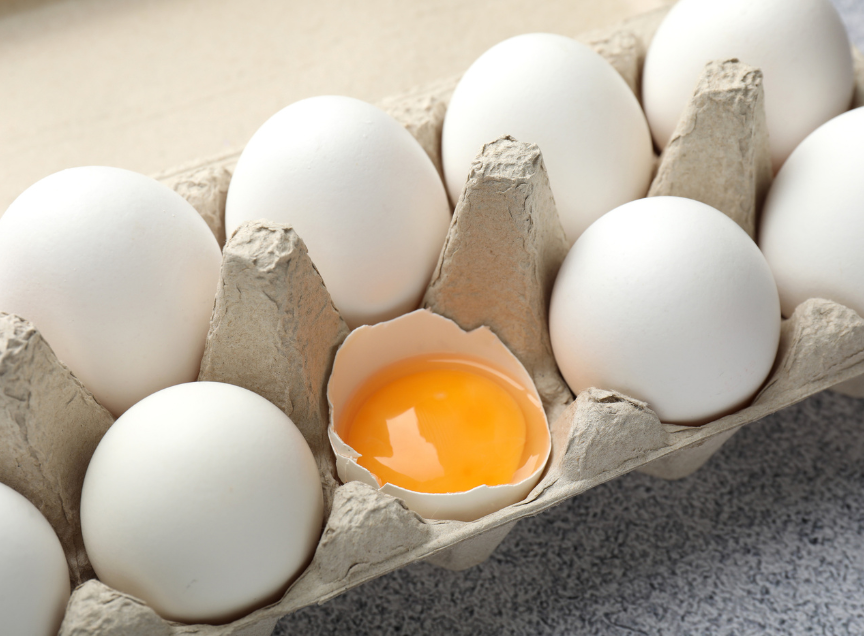
Deana Jones, director of the U.S. National Poultry Research Center, returned to this year’s layer conference to talk about egg quality and safety management. The main point she drove home was that production and processing must work together to create a safe, successful, and quality product, and egg temperature is a big part of that.
Temperature plays a big role in grade standards, which is heavily influenced by the egg’s Haugh unit. According to Jones, the Haugh unit is the gold standard for egg quality and is a measurement of the thick albumen height and the weight of the egg.
The Haugh unit measurement must be made between 45 degrees F and 60 degrees F, to account for the egg warming up once removed from refrigeration.
In the U.S., a Haugh unit score of 72 or higher is a grade AA egg; a score between 60 and 71.99 is a grade A egg, and anything less than 60 is a grade B egg, Jones explained.
The correct egg temperature also prevents certain foodborne pathogens and spoilage organisms from growing in the eggs, and there are laws that ensure that eggs are stored at the right temperature.
According to Jones, 45 degrees F, or 7.2 degrees C, is the mandatory storage temperature for eggs. The eggs must then be held at this temperature within 36 hours of laying if they have been unwashed, and they must stay at that temperature until the customer buys them.
This is the required storage temperature because most foodborne pathogens and spoilage organisms don’t grow well at 45 degrees F or less. However, Jones pointed out that yeasts and molds can grow in these refrigerated temperatures.
Mold doesn’t usually grow on the shell surface but mostly between the shell membranes, which consumers will see when they crack the eggs open.
“Your market share is only as great as your repeat customers and how happy they are with [your] product,” Jones noted.
Customers always ask questions when their eggs don’t look right, and they are quick to blame the store and the producer. So, if your egg quality is poor, due to temperature effects, customers are unlikely to return to your product.
Multiple things can influence egg temperatures. Jones noted that it is all about the efficiency and effectiveness of egg collection.
Eggs must be quickly removed from the hen house and processed, because eggs are processed at elevated temperatures between 115 degrees F and 120 degrees F. So, the quicker that eggs are processed, the sooner they can be packaged and cooled down. All in all, it’s about teamwork.
“You need to work as a team,” Jones concluded. “You need to work through production and processing together to optimize your egg temperature so that you can quickly get these eggs in refrigeration to help maintain a safe and high-quality product.”
HPAI effects
Oscar Garrison, United Egg Producers senior vice president, also returned to this year’s conference with an update on U.S. egg production. He started with an HPAI update and its effect on the layer industry.
Since the outbreak started in 2022, there have been more than 160 commercial layer and/or pullet sites with detections and millions of birds affected. Garrison mentioned that 2025 was the worst year for layer detections with 58 farms and 45.22 million birds affected.
Biosecurity is currently the industry’s main defense against HPAI, but many in the industry are pushing for a vaccine, which has been implemented in some countries internationally.
UEP and the American Egg Board have put together a joint vaccine task force, but due to trade concerns, there has been some slowdown in the journey towards an HPAI vaccine. Garrison noted that UEP and AEB are awaiting approval on their vaccination plan and pilot program.
Garrison concluded his presentation with an update on the UEP. The group recently opened an office in Washington, D.C., to be closer to Congress, and established a congressional egg caucus to address certain egg safety issues, including Salmonella.
“We have seen a significant uptick, for some reason, in the amount of Salmonella outbreaks attributed to shell eggs in recent years,” Garrison said.
The UEP and AEB have created a group to look at shell egg producer and processor education to address these safety issues.
Markets, costs and cage-free
The morning session concluded with presentations from Janice Siegford, Michigan State University professor and associate chair, about understanding the behaviors and welfare of cage-free hens, and Maro Ibarburu, Egg Industry Center research scientist, about U.S. egg markets and costs.
Ibarburu opened his presentation with a discussion of all the costs that go into producing nest run eggs, including processing, packaging, and transportation, and highlighted that feed plays a huge factor in the total cost of production.
In fact, in the last five years, feed accounted for 54 percent of total costs, Ibarburu noted, and it doesn’t look like that is going to change anytime soon.
According to calculations made from soybean meal and corn projections, feed price is expected to be 8 percent higher in 2026-2027 than it was in 2025-2026.
Another thing that can influence egg prices, Ibarburu explained, is disease outbreaks like the COVID-19 pandemic and the current HPAI outbreak. In fact, in years past, eggs have always been the least expensive protein option, but since this current HPAI outbreak started in 2022, prices have skyrocketed.
There has been some reprieve this year as eggs are back to being an affordable protein option, Ibarburu noted. To conclude his presentation, Ibarburu discussed the recent cage-free trend that has taken over chicken housing.
California, Massachusetts, Nevada, Washington, Oregon, and Colorado all require cage-free production, and Utah, Rhode Island, and Arizona will start to require it in the next couple of years.
This shift in production started in late 2015 when multiple restaurants, food manufacturers and retailers announced that they would only purchase 100 percent cage-free by a certain year. In the last 10 years, the cage-free trend has grown a lot.
Surveys even show that egg producers predict that cage-free housing will become increasingly more popular than conventional cages in the coming years.
Bone health
The afternoon session of the conference opened with a presentation from Dr. Woo Kim, UGA Poultry Science professor, about nutrition solutions for laying hens’ bone quality management.
The main point of Kim’s presentation was that maintaining good bone health is very important for the shell of the egg. Although 60 percent of eggshell calcium comes from a hen’s diet, that remaining 40 percent comes from the quality of the hen’s bones.
Kim mentioned that there a plenty of strategies to improve eggshell quality and skeletal integrity and prevent bone disorders in laying hens. Those strategies include:
- Balanced and adequate probiotic supplementation
- Proper calcium to phosphorous ratios in the feed
- Proper feeding programs, specifically night feeding since eggshell is formed during the night
- Stimulating bone growth and mineralization before onset of egg production in laying hens
Hens start laying eggs at 19 weeks, so the period between 18 and 19 weeks is very important, as well as getting a good start. That is why producers must maximize bone mass before the laying period.
However, a lot of different things can disrupt the process of bone formation and bone resorption, including heat stress, age, diseases, oxidative stress inflammation, and certain activities, Kim noted.
Heat stress reduces feed intake, calcium consumption, and bone and eggshell quality. Some potential nutrient strategies for heat stress include functional amino acid supplementation, vitamin supplementation, and feed additives.
As for diseases, fatty liver disease can be a huge problem for hens. There are two types of FLD, but both can reduce egg production. Some potential nutrient strategies that Kim shared for fatty liver disease include omega-3 fatty acids and herbal extracts.
Enteric diseases and other infections can cause gut damage, inflammation, and oxidative stress, which can further cause decreased nutrient digestibility, skeletal integrity, and egg production and quality. Kim noted that feed additives and vitamins are some of the best ways to mitigate the negative effects of enteric diseases.
Overall, producers need to be very conscious of what they are feeding their hens and how they are keeping them healthy and safe, because almost anything can affect hen bone health, which ultimately affects egg quality.
Pest management
The conference ended with presentations from Maurice Raccoursier, UGA clinical assistant professor, about updates on the top poultry diseases, Amy Murillo, University of California-Davis associate professor, about ectoparasites, and Xian Yang, University of Wyoming distinguished postdoctoral fellow, about laying hen production technologies.
Murillo opened her presentation by focusing on northern fowl mites. Northern fowl mites are the number one parasite found in layers, no matter the housing system.
They live full-time on the chickens, their populations grow quickly, and producers don’t notice them until it’s too late, Murillo explained. Fowl mites are usually discovered on the laid eggs, and they can use the eggs or egg belts to travel from hen house to hen house.
Northern fowl mite infestation can cause all kinds of problems for the birds including increased preening, anemia and even mortality from the mite blood feeding.
This can lead to decreased egg production and decreased feed conversion efficiency, because birds will need to consume more feed to produce the same number of eggs.
Despite being the number one ectoparasite found in layers, northern fowl mites aren’t the only parasites that producers should be wary of.
“We expect that we might start to see an increased diversity of ectoparasites as we move away from these wire, conventional caged systems,” Murillo noted.
A survey of backyard flocks found that lice, sticktight fleas, and other mite species can be found infesting birds. For lice specifically, they are often dismissed in commercial poultry because they only feed on the bird’s feathers, not the blood, so they don’t pose any kind of significant economic threat.
Sticktight fleas, on the other hand, are blood feeding like mites. The females will lay eggs directly on the bird without detaching, so they spend their entire life cycle imbedded on the birds.
The only difference between sticktight fleas and northern fowl mites is that the fleas will feed on mammals, including humans. Other mite species found in this backyard survey include poultry red mites and scaly leg mites.
Interestingly enough, bedbugs can also be found in commercial flocks, the same bedbugs that feed on humans.
As more ectoparasites are found in poultry flocks, it’s important that producers know where they’re coming from. The most common sources for ectoparasites are wild birds and nests, rodents, pullets, equipment, and people.
For rodents, these ectoparasites can’t infest/live full time on rodents, but they can still use them for access into the housing systems. Mites don’t usually do well on pullets because their feather structure isn’t the same as adults, but it is still possible for bugs to come in on the pullets.
With the exception of bedbugs, these ectoparasites don’t infest people, but we can still move them around.
There are many ways to mitigate and kill these ectoparasites with acaricides being the most commonly used method in conventional caged systems. However, using acaricides comes with certain complications.
For one, they have to be applied at an extremely high pressure and at a certain angle to get into the feathers of the bird. Two, there are a few chemical compounds that can still be used on birds, especially when they’re laying. Three, mites have built up resistance to acaricides, and finally, it’s harder to apply acaricides in cage-free systems.
However, there are ways for hens to treat themselves for ectoparasites with dustbathing and hanging sulfur dust bags. Additionally, essential oils and Exzolt are alternative control options that producers can consider.
Murillo noted that there is still more research to be done on the effectiveness of essential oils as there was some variation in success from bird to bird in an experiment done with thyme essential oil.
Murillo concluded her presentation by mentioning that co-infestation can be a problem and that they still need to learn which parasite to prioritize when this happens.
Once again, the Georgia Layer Conference was an informative meeting that provided the layer industry with the information it needs to keep its hens safe, healthy, and producing at the highest level.
