

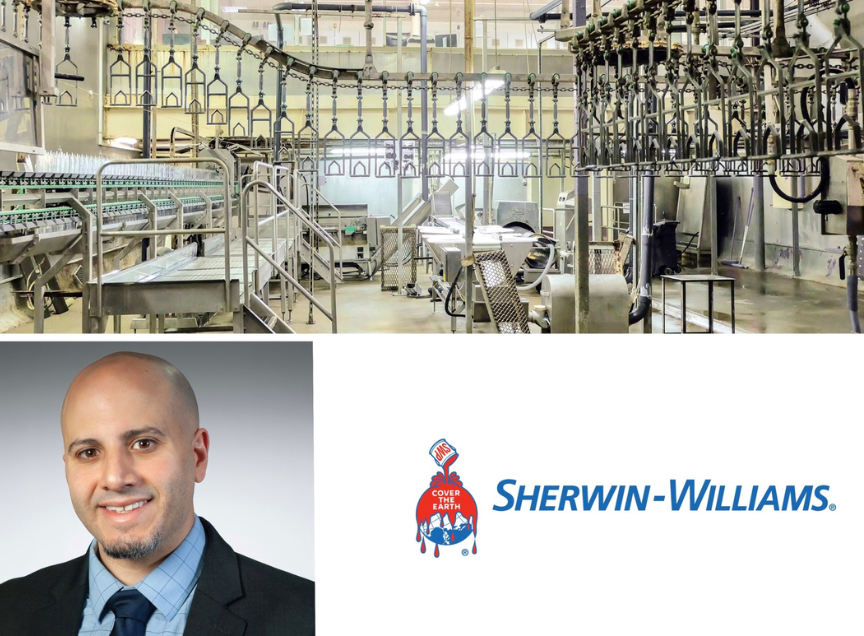

CLEVELAND — Protein processing facilities — whether handling meat, poultry, seafood or other protein products like eggs, dairy-based proteins or plant-based alternatives — operate under some of the most demanding conditions in the food industry.
Each subsegment presents unique challenges: meat processing often involves heavier equipment and aggressive cleaning protocols; poultry processing requires rapid throughput and precise temperature control; and seafood operations face constant exposure to saltwater and brine, which could cause corrosion.
Meanwhile, facilities handling eggs, dairy-derived proteins like whey or casein, or emerging plant-based products often navigate hybrid environments requiring both dry and wet sanitation strategies. Across all subsegments, the need for hygienic, durable and compliant surfaces is non-negotiable. That’s where high-performance coatings play a critical role.
Importance of coatings in processing facilities
Protein processing environments face frequent high-pressure washdowns, exposure to fats, oils, blood, brines and temperature fluctuations. These conditions create a high risk of contamination and require materials that meet USDA, U.S. Food & Drug Administration and other stringent food safety regulations. Seamless, chemical-resistant coatings help maintain compliance while protecting against microbial growth and moisture ingress.
Specialized coatings can be tailored to specific facility types. For example, providing enhanced salt resistance for seafood lines, or antimicrobial protection in egg and dairy operations where pathogens like Salmonella or Listeria are of concern. In newer plant-based or alternative protein facilities, coatings must support allergen management and cleanroom-like sanitation needs, often within retrofitted environments.
Durable coatings protect the structural integrity of floors, walls, ceilings and roofing systems. Whether dealing with the corrosive conditions of a rendering plant, the high moisture demands of a poultry chiller, or the thermal shock concerns from hot washdown areas, the right high-performance coatings reduce wear, extend facility lifespan and minimize costly shutdowns.
Slip-resistant, easy-to-clean coatings contribute to worker safety while improving the speed and effectiveness of sanitation. In areas where thermal insulation is key — like dairy protein drying rooms or seafood freezer zones — thermal insulative coatings reduce condensation, energy loss and injury risks.
Resinous floors
Durable, high-performance flooring systems such as urethane cement or epoxy provide:
- Customizable slip resistance for wet and oily environments, tailored to your specific needs.
- Seamless surfaces to eliminate harbor points for bacteria.
- Resistance to thermal shock and chemicals for hot washdowns and sanitizers.
Coating needs vary — seafood areas demand salt-resistant systems, while egg and dairy processing lines benefit from coatings that resist acidic byproducts and frequent cleaning cycles.
Seamless walls and ceilings
Hygienic wall and ceiling coatings offer easy-to-clean, non-porous surfaces that withstand splashes, steam and sterilants. These are especially valuable in high-humidity or high-splash zones, from poultry processing rooms to whey powder production areas.
Thermal insulative coatings
TICs improve temperature control and help prevent condensation, especially in chilled environments or dry ingredient processing rooms. They reduce thermal losses of pipes and freezers without relying on bulky insulation and add protection from hot surfaces like pipes and equipment, helping meet safety and sustainability goals.
Roofing solutions
Fluid-applied roof coatings protect facilities from leaks, mold risks and thermal degradation. These coatings are essential in preventing hygiene risks in all types of protein processing facilities — especially those with sensitive materials like powders or open washdown areas.
Additionally, these coatings have significant cost saving benefits. Fluid-applied roof coatings allow for roofing repairs and patches instead of having to be completely replaced.
Every protein processing environment has unique needs. A strategic maintenance program helps ensure long-term success by aligning coating solutions with operational schedules and priorities.
The maintenance process
- Facility evaluation: Assess site conditions and identify coating needs across all production and support areas.
- Project planning: Coordinate around production cycles, budget constraints and long-term facility goals.
- Execution and completion: Ensure quality application through expert guidance and post-installation verification.
From the salt-rich environments of seafood processing to the high-throughput demands of poultry plants, and from egg and dairy protein facilities to plant-based production lines, protein processing environments demand highly specialized solutions.
High-performance coatings safeguard facility investments and keep operations running smoothly. With the right materials and maintenance approach, facilities can maintain the highest standards of safety, efficiency and compliance across all segments of the protein industry.
Feraas Alameh serves as the market segment manager, food & beverage for Sherwin-Williams Protective & Marine. With more than 15 years of experience in the coatings industry, he is a seasoned business leader with a strong focus on innovation and the development of effective market strategies across diverse segments.
