


WASHINGTON — The administration has announced $12 billion in farmer bridge payments to American crop farmers in response to increased production costs and trade market disruptions. The announcement was made Dec. 8 by President Donald Trump, U.S. Agriculture Secretary Brooke L. Rollins, and U.S. Treasury Secretary Scott Bessent.
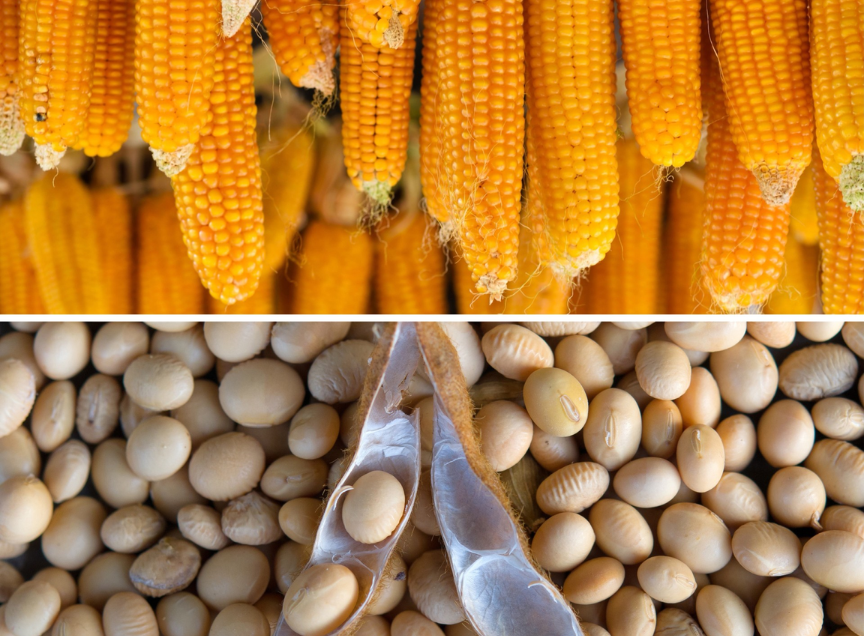
The USDA’s announcement notes that these payments are to be paid to farmers through investments of the “One Big Beautiful Bill Act (OBBBA),” and include reference prices, noted to increase 10 to 21 percent, for such poultry feed commodities as corn and soybeans.
Of the $12 billion total, $11 billion is slated for use under the Farmer Bridge Assistance program (FBA), and provide relief to row crop farmers producing corn, soybeans, wheat, oats, peanuts, barley, cotton, canola, peas, sorghum, and others. The remaining $1 billion is being reserved for commodities not covered, like sugar and specialty crops.
Qualifying farmers with the FBA Program can expect these payments by the end of February, officials noted.
“FBA will help address market disruptions, elevated input costs, persistent inflation, and market losses from foreign competitors engaging in unfair trade practices that impede exports,” the USDA’s release added. “The FBA Program applies simple, proportional support to producers using a uniform formula to cover a portion of modeled losses during the 2025 crop year. This national loss average is based on (USDA’S) FSA (Farm Service Agency) reported planted acres, Economic Research Service costs of production estimates, World Agricultural Supply and Demand Estimates yields and prices and economic modeling.”
Producers can contact the USDA regarding these bridge payments by email at farmerbridge@usda.gov.
“The plan we are announcing today ensures American farmers can continue to plan for the next crop year,” Rollins said in a statement. “It is imperative we do what it takes to help our farmers, because if we cannot feed ourselves, we will no longer have a country. With this program serving as a bridge to the improvements President Trump and Republicans in Congress have made, it will allow farmers to leverage strengthened price protection risk management tools and the reliability of fair trade deals so they do not have to depend on large ad hoc assistance packages from the government.”
“Delivering this farm assistance will bridge the gap until farmers realize the benefits of the recent trade deals and the One Big Beautiful Bill that will provide the certainty they need,” U.S. Senate Committee on Agriculture, Nutrition and Forestry Chairman John Boozman (R-Ark.), said. “This announcement provides much needed relief to rural America. My colleagues and I remain focused on the state of farm country and are prepared to pursue additional steps to ensure a strong future for farm families.”
Providing counter commentary, U.S. Sen. Amy Klobuchar (D-Minn.), the ranking member of the Senate Committee on Agriculture, Nutrition, and Forestry, said, “While we need to help farmers who have been hurt by the President’s across-the-board tariffs, ultimately farmers want trade — not aid.”
“The easiest way to give our farmers more certainty would be for the President to end his tariff taxes,” Klobuchar added. “This assistance will clearly benefit some farmers now, but a one-time payment is not a long-term fix — only restoring these markets can do that. While more details are needed, as announced this assistance may fall short for many farmers who have been harmed by the President’s reckless tariffs.”
Agriculture industry reactions
Feed and grain representative associations have been expressing the need for the nation’s farmers to gain some economic relief after some difficult growing seasons.
The American Soybean Association noted its gratitude for this program that provides some financial help to assist in covering 2025 growing season debt.
“We appreciate the administration’s attention to the challenges farmers continue to face in today’s market,” Caleb Ragland, ASA president and a Kentucky farmer, said in a statement. “While we await additional details, we believe the Farmer Bridge Assistance Program is a positive first step to restore certainty as soybean farmers market this year’s crop and plan for the 2026 planting season. We look forward to working with Congress and the administration on broader support for the farm economy, including long-term, market-driven solutions that strengthen demand for U.S. soy and allow farmers to compete and thrive in the global market.”
Zippy Duvall, American Farm Bureau Federation president, said, “America’s farmers have been hit from every direction during this economic storm. They face the same high prices as all of America’s families, as more of their income is going to household bills and higher operating costs, including loans, equipment and supplies. At the same time, farmers are receiving historically low prices for most major crops — they’re expected to lose $34 billion this year alone.”
“We appreciate that Congress addressed many economic challenges in legislation earlier this year, but many farm program improvements will not kick in until next year,” Duvall added. “The assistance announced today will make an immediate impact by providing a lifeline for farmers who work to ensure a healthy, safe and abundant food supply.”
On the state level, Garrett Hawkins, Missouri Farm Bureau president, noted that this announcement, “… is an important step toward stabilizing the farm economy in the short term and addressing the broader challenges faced by our farmers and ranchers. We look forward to continued efforts from the federal government to recalibrate trade strategies, open new markets, bolster domestic demand, and strengthen long-term farm viability.”
Adding to efforts to open new markets, the National Corn Growers Association, while highlighting the importance of this funding, cited its push for expanding such markets as ethanol for the nation’s corn producers.
“While we await additional details to assess the impact that the farmer bridge assistance program will have on corn growers, we also need immediate market-based solutions,” Jed Bower, NCGA president said in a statement. “Congress can quickly take a first step in that direction by passing the Nationwide Consumer and Fuel Retailer Choice Act of 2025. The legislation would expand access to fuel with 15 percent ethanol year-round, increasing demand for corn for ethanol and saving consumers money at the pump.”
Bower added that his association is also encouraging the administration, “to work as expeditiously as possible to secure new trade opportunities that will open foreign markets to corn and corn products.”
Addressing the struggles farmers are facing with trade uncertainties and input costs, Rob Larew, National Farmers Union president, added that his group, while appreciative of this financial assistance, long-term plans are needed.
“Across the country, farmers are confronting the combined pressures of disrupted trade, rising input costs, and depressed commodity markets,” Larew said. “This relief will provide near-term support for many farmers working hard just to stay afloat. Short-term payments, while important, are only a first step. What we truly need are long-term structural fixes that restore viability and stability to family farms and ranches for generations to come.”
