

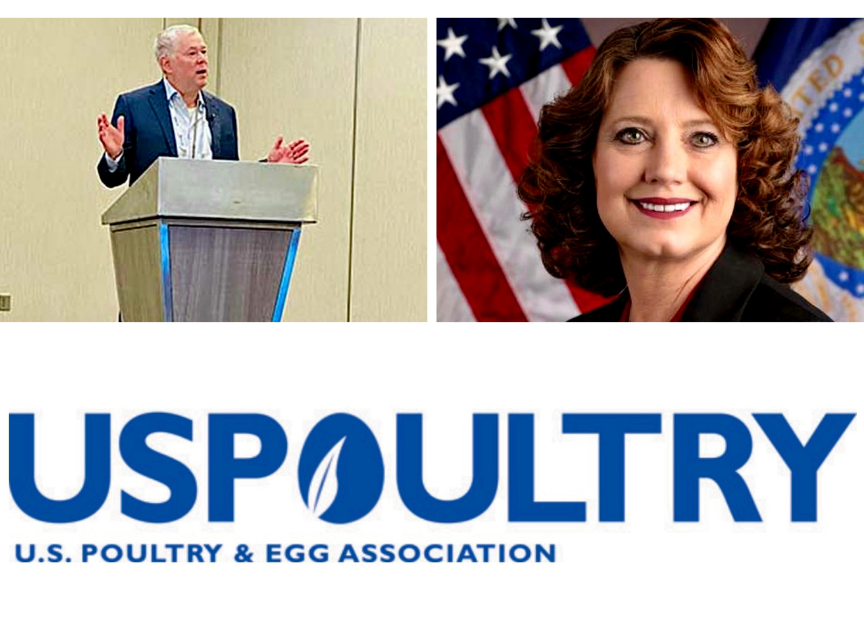

TUCKER, Ga. — Poultry industry professionals recently gathered at the 2026 USPOULTRY Poultry Processor Workshop in Greenville, S.C., to explore the latest advancements in food safety, processing technologies, maintenance and reliability systems, workforce development and regulatory initiatives.
Through expert-led presentations and peer discussions, attendees gained practical insights and strategies designed to enhance operational efficiency, strengthen food safety programs and support long-term business success across poultry processing operations.
Neal Walsh, Butterball LLC chief operating officer, emphasized that leadership development begins with recognizing potential as the combination of ability, aspiration and engagement, using the analogy of a three-legged stool to illustrate how those qualities work together to support growth into broader responsibilities. He also highlighted the value of the 9-box matrix as a tool for evaluating both performance and future potential. Key takeaways included the importance of fair and consistent assessments, shared responsibility for development across individuals, and coaching as an ongoing process.
Regarding operational efficiencies, Gilberto Carrera, Perdue Farms senior director of maintenance and reliability, emphasized the importance of structured maintenance programs in driving operational excellence, maximizing production capacity and optimizing costs through standardized processes, best practices, employee engagement and technology. Carrera highlighted how effective maintenance and reliability system programs can improve asset performance, reduce equipment downtime and labor requirements, support workforce development and create greater operational stability.
Dr. Mindy Brashears, USDA Food Safety & Inspection Service undersecretary, provided an update on the agency’s science-based efforts to reduce foodborne illness through data-driven decision-making, industry collaboration and practical food safety solutions. Brashears highlighted ongoing research and validation work related to Salmonella detection and quantification, as well as its three-pillar approach focused on sampling strategies, strengthening Hazard Analysis Critical Control Point (HACCP) fundamentals and consumer education.
Art Lona, Kreative Systems Inc. vice president, discussed ultraviolet (UV) light technology and highlighted its effectiveness as a non-chemical intervention for controlling pathogens in poultry and egg processing. He explained that UV-C light physically destroys microbial DNA, rendering pathogens such as Salmonella, Campylobacter, Listeria monocytogenes, E. coli and others unable to replicate or survive, while leaving no chemical residues on treated products.
