

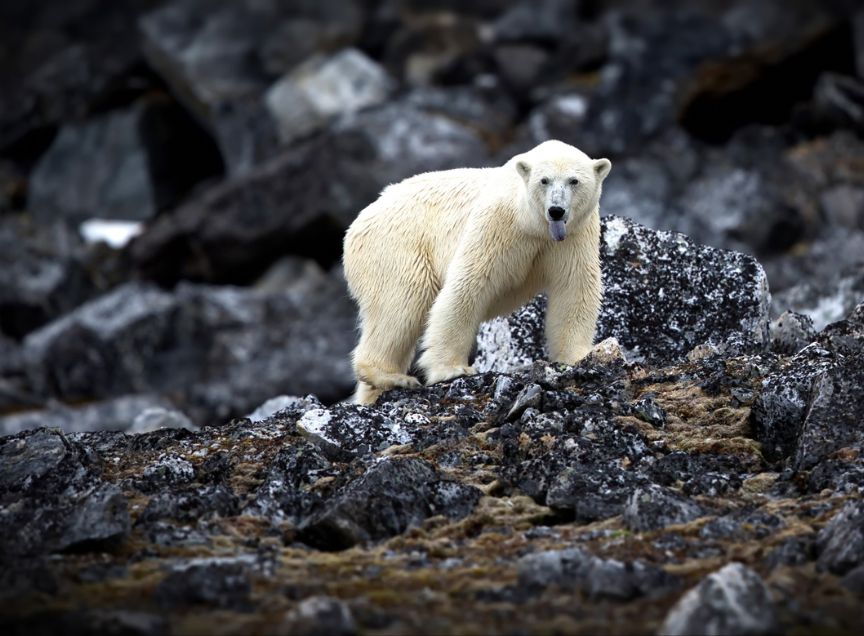

SVALBARD, Norway — Norwegian veterinary authorities on May 19 confirmed Europe’s first polar death from highly pathogenic avian influenza. The approximately one-year-old male polar bear was found in the Svalbard region in the Arctic, which is about 600 miles from the North Pole.
The dead polar bear was initially discovered, along with a dead walrus, by Raudfjord tour guides who notified the Norwegian Polar Institute. Other official groups became involved, and testing was conducted by the Norwegian Veterinary Institute. The institute confirmed the detection of the HPAI H5N5 subtype strain of the virus. It also was noted that it appeared that the two animals had been lying deceased for some time before being detected.
The HPAI virus was previously confirmed in the region in wild seabirds in 2022, a walrus in 2023, and in Arctic foxes in 2025. Other detections in mammals, such as lynx and otters, is being attributed to wild bird spillover, Norwegian authorities note, adding that because avian influenza causes clinical signs of brain disease similar to rabies; tests for rabies were also performed.
Regarding other animals in the area, “two additional polar bears were observed showing signs of hindlimb lameness, raising concern amongst experts,” the Norwegian Veterinary Institute said in a release. “While such symptoms can have several causes, they may also indicate neurological disease. Similar signs have previously been reported in a polar bear diagnosed with rabies and are also associated with highly pathogenic avian influenza in predators.”
Officials concluded that no rabies was present in the recent dead polar bear or walrus.
Two veterinarians with the institute traveled to the Svalbard area to assist with sample collection and to assist the local authorities.
“The carcasses were quickly located following a helicopter flight from Longyearbyen, and samples were successfully collected,” Dr. Knut Madslien, veterinarian and wildlife health expert, said in a statement. “We did not observe any additional sick polar bears from the air.”
“These findings are part of the ongoing spread of highly pathogenic avian influenza in Europe, where the virus is increasingly being detected in mammals,” Dr. Ragnhild Tønnessen, Norwegian Veterinary Institute avian influenza coordinator, said in the release. “In recent years, it has also expanded into new areas, including the Arctic, where it may impact vulnerable wildlife populations and fragile ecosystems.”
“It is important that we monitor the situation closely to better understand these developments and manage potential risks,” Madslien added.
In North America, bird flu was detected in a polar bear in Alaska in August 2023.
“It is not known how the virus affects individual animals or how it might impact the polar bear population,” the Norwegian Veterinary Institute added.
Norway authorities also noted that they will be continuing further analysis of this HPAI subtype in the region to see if there are any signs of it adapting to additional mammal species.
