

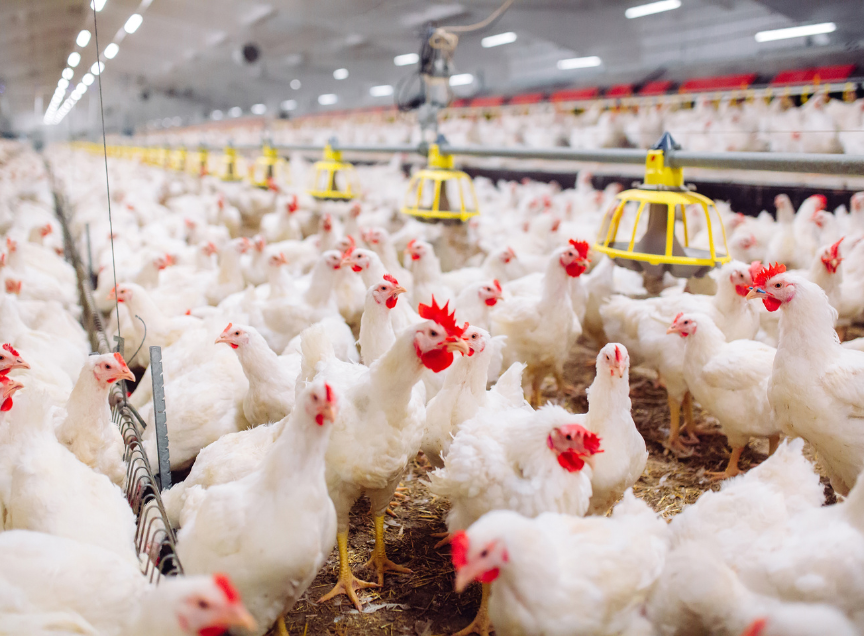

COLLEGE PARK, Md. — The University of Maryland has recently released studies that could be beneficial to the future of the poultry industry. Researchers at the university are focusing on the two different forms of AI: avian influenza and artificial intelligence.
In their study, Matthew Gonnerman, Dr. Jennifer Mullinax, and their colleagues looked to successfully identify the environmental factors associated with highly pathogenic avian influenza spillover while accounting for spatial and temporal trends related to migration. Additionally, they were looking to assess how biosecurity procedures are associated with decreased events of spillover, while accounting for local risk levels.
Spillover events are when the virus transfers from wild birds into poultry and are related to the proximity of wild bird populations to domesticated birds and environmental conditions.
Before this study and the first outbreak of HPAI infections in North America, there wasn’t enough data available to create a predictive risk model for the United States. However, the outbreaks in North America allowed researchers to better describe the dynamics of HPAI spillover risk at the farm level.
For the study, they used information from commercial and backyard farms with chickens, turkeys or a mix of both that were within a certain distance from observed spillover locations. Additionally, the researchers used survey data from commercial turkey farms that were confirmed positive for HPAI between January and October 2022.
When it came to environmental factors, Gonnerman et al. (2025) found that there was an increasing risk of spillover with cooler temperatures, wetter weather conditions, and an abundance of waterfowl in the area. Also, the highest risk for spillover was in the Midwest and Pacific Northwest regions of the U.S., along with smaller hotspots in Maine and Florida, and during migration season.
As for biosecurity, Gonnerman et al. (2025) found that multiple transmission pathways are responsible for different spillover events, and no single biosecurity effort will be completely effective against spillover. However, heat-treating litter was one of the most well supported biosecurity efforts for reducing risk, because HPAI loses infectivity when exposed to warmer temperatures during an extended period of time.
Other biosecurity measures that can be taken include having a vehicle wash station on site and ensuring crews have access to restrooms or port-a-potties; both measures mitigate risk and limit traffic around buildings.
Although multiple transmission pathways are responsible for spillover events, the researchers found that humans are a more significant mode of transporting HPAI into poultry operations than direct interactions between wild and domestic animals, according to new findings published in the journal One Health.
It was also found that turkey farms were the most likely production class to experience a spillover event, specifically backyard turkey farms.
With all this in mind, it’s important for poultry farmers to take action to limit the interaction between contaminated employees and equipment and healthy poultry. The results of this study broadly direct the surveillance of HPAI in
wild and domestic populations, identifying when and where we are most likely to see spikes of the virus while also providing an understanding of how poultry farms can use biosecurity measures to protect themselves from risk.
Artificial intelligence
As for the other AI, artificial intelligence, researchers from the University of Maryland School of Medicine completed a study where they developed a new way to use an AI tool to scan notes in electronic medical records to find high-risk patients who may have been infected with avian influenza.
The objective of this study was to determine how well AI could detect high-risk patients who may have been overlooked during their initial treatment. The research team used a generative AI large language model, which is a specific generative AI model that focuses on text and language.
The model picked out more than 70 emergency department notes because they mentioned high-risk exposure for bird flu, such as jobs related to poultry and livestock. However, after some review, only 14 of the patients’ flagged were confirmed to have had recent, relevant exposure to animals known to carry H5N1, Deborah Kotz, senior director of media relations for the University of Maryland School of Medicine said.
These flagged patients weren’t tested specifically for bird flu, so their potential infections weren’t confirmed.
“With H5N1 continuing to circulate in U.S. animals, our biggest danger nationwide is that we don’t know what we don’t know,” said Dr. Katherine E. Goodman, the study’s corresponding author, and assistant professor of epidemiology & public health at UMSOM and a faculty member of the University of Maryland Institute for Health Computing.
“Because we are not tracking how many symptomatic patients have potential bird flu exposures, and how many of those patients are being tested, infections could be going undetected,” Goodman added. “It’s vital for healthcare systems to monitor for potential human exposure and to act quickly on that information.”
Since 2024, there have been hundreds of confirmed cases of bird flu in dairy herds, poultry, and wild birds. However, identified cases in humans remain few and far between, with 70 confirmed cases and only one death, according to the Centers for Disease Control and Prevention.
Despite these low numbers, it is more than likely that more human infections have gone unnoticed due to a lack of testing, the researchers noted.
All things considered, the researchers suggest that large language models could be used in the future to alert healthcare providers in real time because of the growing risk of infections transmitted by animals, Kotz said.
With both studies published recently, it shows how the poultry industry, and those adjacent to it, are dedicated to preventing and controlling the spread of bird flu, as cases continue to rise around the country.
