

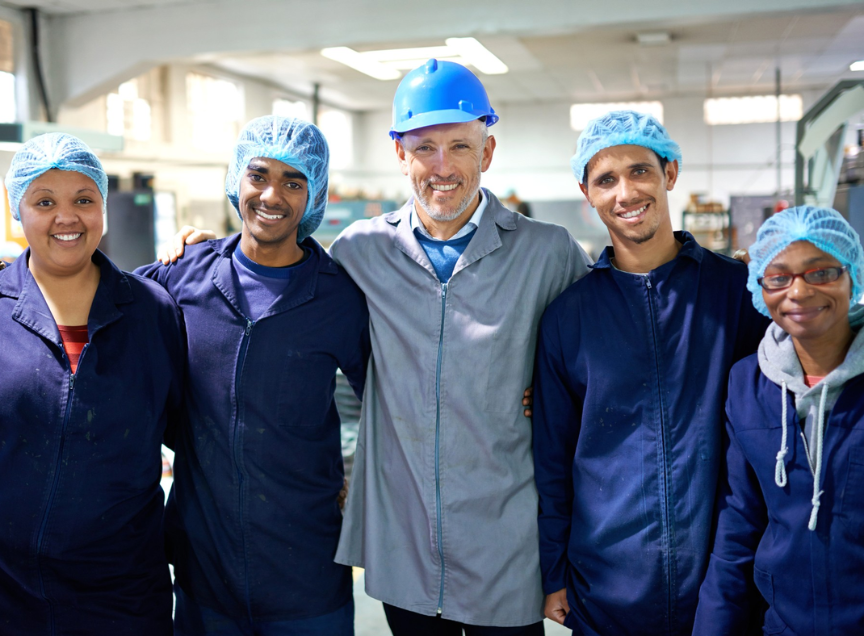

WASHINGTON — Poultry processing injury and illness rates are at their lowest according to Bureau of Labor Statistics data, and low compared to other manufacturing industries.
The total recorded poultry processing industry rate of injury and illness was 2.4 per 100 full-time workers in 2024, this was the lowest rate recorded for the sector by the BLS, the Joint Poultry Industry Safety & Health Council recently reported.
The rate for similar agricultural industries was 3.2 per 100, and 3.3 per 100 for the entire food manufacturing sector, the BLS numbers showed, adding that for all manufacturing industries the rate is 2.7 per 100, and 2.6 per 100 for all general industries.
The poultry safety council adds that the results for poultry processing are a 90 percent decrease from the oldest BLS recorded data, which is from 1994.
“Poultry processing has achieved the lowest injury and illness rates ever recorded by BLS, confirming what our industry has worked toward for decades,” the Joint Poultry Industry Safety & Health Council said in its announcement. “This milestone reflects sustained investments in ergonomics, automation, training, and early intervention programs that put employee health first. While we are proud of this progress, our commitment to continuous improvement in workplace safety remains unwavering.”
The council membership consists of representatives from the U.S. Poultry & Egg Association, the National Chicken Council and the National Turkey Federation.
According to the BLS, the total recordable incident rates per 100, in 2024, for poultry processing were 2.4; egg/hatchery, 4.4; rendering, 3.8; feed, 3.5; and support activities for animal production, 3.5. The illness rates were: poultry processing, 1; egg/hatchery, 1.6; rendering, 1.3; feed, 0.8; and support activities for animal production, 1.9.
“Protecting our workforce is central to everything we do,” the associations added. “The latest Bureau of Labor Statistics data shows that poultry processing continues to outperform general industry, manufacturing, and food manufacturing in incident rates — an achievement that reflects years of focused investment in safety, training and innovation. While we are pleased with this progress, we remain committed to raising the bar even higher to safeguard the health and well-being of our employees.”
