

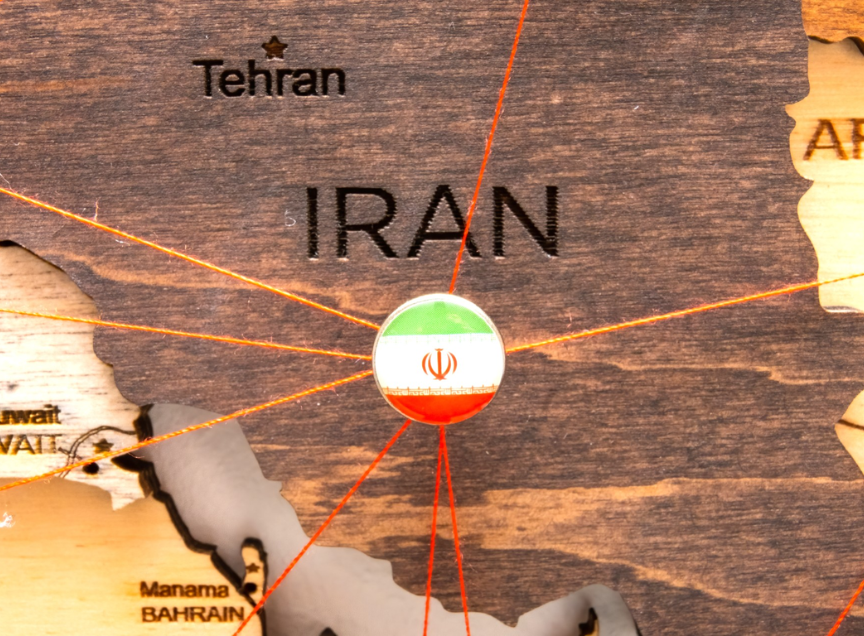

WASHINGTON — Several weeks into the armed conflicts with Iran, and the resulting block of the Strait of Hormuz, which is a key maritime shipping channel for fertilizer and energy — what are the potential impacts on U.S. agriculture?
With this block of the Strait of Hormuz, and the resulting movement of fertilizer being hindered, the effects may be felt by crop farming like corn and soybeans, which are major inputs for the nation’s poultry industry.
“Farmers have navigated extremely high fertilizer prices for several years, and have faced sustained expensive input prices for the past four years,” Jed Bower, National Corn Growers Association president, said. “The uncertainty in the Middle East complicates this situation as farmers will soon be planting the second most expensive corn crop on record.”
“While farmers source domestically, when possible, the U.S. cannot solely provide for the fertilizer needs of corn farmers; imports are necessary,” Bower added. “Unfortunately, some fertilizer providers have previously taken actions that blocked foreign suppliers from the U.S. market and only further exacerbated an already inflated market.”
“We are fearful that additional disruptions to supply chains will justify price increases that will be expected to be borne by those already struggling under the weight of consecutive years of negative returns,” he said. “We would welcome conversations with fertilizer provides on options to weather the current uncertainty in partnership with their most important customers.”
In information from the NCGA, the group noted that before the war approximately half of the seaborne nitrogen trade was moving through the strait from suppliers in Iran, Qatar, Saudia Arabia, and the United Arab Emirates.
“Though farmers, importers, and retailers have been contracting and obtaining fertilizer for months, March, April, and May are typically ‘big’ months for U.S. fertilizer imports, particularly nitrogen, ahead of upcoming spring delivery,” NCGA said in an announcement. “However, it takes at least 30-45 days to load and transit a cargo of fertilizer from the Middle East to the Port of New Orleans, meaning that these ships are loaded in the (January to March) range to be booked into U.S. customs in those months, making the timing of the conflict critical to the end of the import cycle.”
To assist with fertilizer and fuel movement through U.S. ports, agricultural groups have applauded the administration’s move to temporarily waive the Jones Act and facilitate product transport. The Jones Act was enacted in 1920 to support domestic maritime capabilities and security by requiring goods be transported between U.S. ports on vessels that are built, owned, and crewed by the U.S.
“The conflict in the Middle East has led to a temporary disruption in global energy and fertilizer markets,” U.S. Agriculture Brooke Rollins said recently on her X account. “Thankfully our farmers and families are staying ahead of the curve.”
“While the vast majority of American farmers have already locked in their fertilizer for the 2026 growing season, we’re also looking out for those who haven’t,” Rollins added. “We’ve temporarily waived the Jones Act, opened up fertilizer exports from Venezuela, and keeping every option on the table to keep supplies stable and costs under control.”
The American Farm Bureau Federation also acknowledges this action.
“Farmers applaud President Trump for temporarily waiving the Jones Act regulations to allow more ships to bring critical fuel and fertilizer materials to America’s ports,” Zippy Duvall, AFBF president, said. “Spring planting season is already underway and the jump in fertilizer and fuel costs, as well as the threat of shortages, sent shockwaves across rural America at a time when farmers are already grappling with low commodity prices and high inflation.”
Given the time-sensitive nature that this current war with Iran could have on agriculture, Duvall sent a letter directly to President Donald Trump.
“Without strategically prioritizing the delivery of critical farm inputs such as urea, ammonia, nitrogen, phosphate, and sulfur-based products, the U.S. risks a shortfall in crops,” Duvall said in his letter. “Not only is this a threat to our food security — and by extension our national security — such a production shock could contribute to inflationary pressures across the U.S. economy.”
Similarly, Corey Rosenbusch, The Fertilizer Institute’s president and CEO, also has sent a letter directly to President Trump regarding the import of fertilizer products, noting the production from domestic suppliers and the need for imports.
“U.S. fertilizer producers provide considerable volumes of product to support domestic supply, but the U.S. relies on a mix of domestic production and imported product to supply U.S. growers, with the relative share dependent on the product and the year,” Rosenbusch said in the letter. “Currently, domestic fertilizer production solely for the fertilizer macronutrients of nitrogen, phosphate, and potash combines to meet 65 percent of overall U.S. domestic supply for those products; the remainder comes from imports.”
“The longer that shipping is hindered for the range of fertilizer products, the greater the likelihood that crop production will be affected this year,” Rosenbusch added.
Groups such as the American Soybean Association, along with a coalition of agriculture organizations, have called on the U.S. Department of Commerce to revoke duties on Morocco and Russia for the import of phosphate fertilizer.
“Soybean farmers are already facing tight margins and rising input costs, and fertilizer is one of the most critical and expensive inputs we rely on to grow a crop,” Scott Metzger, ASA president, said. “Trade import duties that limit supply and drive-up prices only make it harder for farmers to stay afloat. We need access to reliable, affordable fertilizer to remain competitive and continue producing for our customers at home and abroad.”
ASA adds that fertilizer costs were a significant operating expense for the past year and an increase in prices would continue to influence planting decisions.
“With corn prices low and input costs high, Iowa’s corn growers are facing a fourth year of negative profitability — a situation made even more uncertain by the volatility in the Strait of Hormuz affecting global trade,” Mark Mueller, Iowa Corn Growers Association president, added.
Globally, the International Fertilizer Association, based in Paris, France, recently issued an open letter citing the importance of protecting global feed security and fertilizer supply chains stemming from the Middle East.
“Fertilizers are essential to feeding the world,” IFA’s letter states. “Research shows that roughly half of the global population depends on crops grown with manufactured fertilizers. When fertilizer supply is disrupted, the consequences are felt directly in farmers’ fields and ultimately in global food availability.”
“At a time of heightened uncertainty, it is critical that policymakers recognize fertilizers as a strategic component of global food systems and work to keep key agricultural supply chains functioning smoothly,” the IFA added. “Ensuring that fertilizers can move reliably across borders and through major maritime routes is essential to supporting farmers and safeguarding food security worldwide.”
