

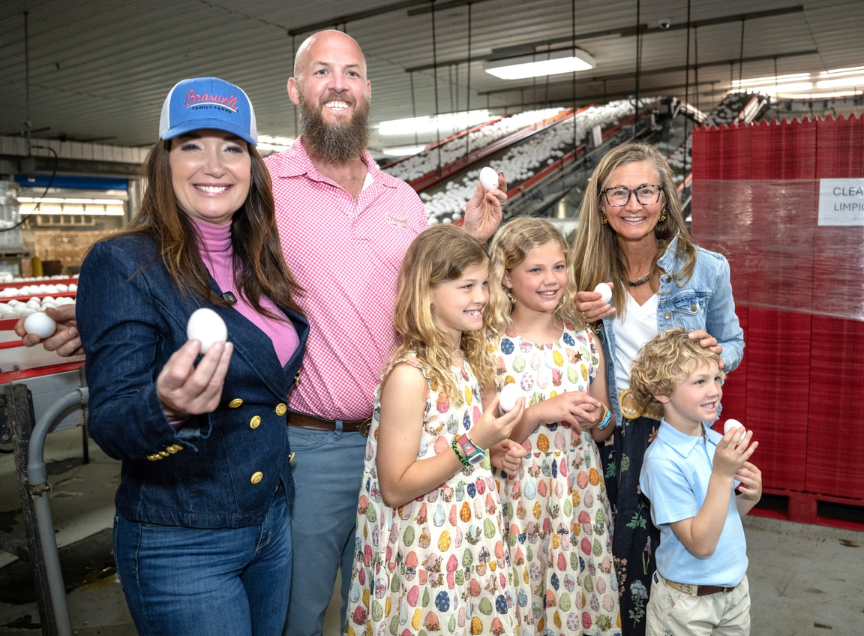

NASHVILLE, N.C. — Braswell Family Farms, in partnership with the American Egg Board, hosted U.S. Agriculture Secretary Brooke Rollins to its North Carolina facility to get a closer look at the fourth-generation, family-owned farm that is supplying the eggs for the annual White House Easter Egg Roll.
Braswell will be shipping off approximately 40,000 hand-dyed eggs to Washington, D.C., for the 2026 national Easter celebration, traditionally held at the White House on the Monday following Easter Sunday.
About 3 billion eggs will be consumed and decorated by Americans for the holiday, AEB notes.
While at the farm, Sec. Rollins toured the Braswell operation’s egg grading, processing, packaging, and laying-hen flocks.
“Easter is the egg’s Super Bowl, and we were honored to offer Secretary Rollins a front-row seat to experience the dedication of egg farmers like the Braswell family in bringing eggs to the table for Easter and every other day of the year,” Emily Metz, AEB president and CEO, said.
“America’s egg farmers are incredibly proud to help bring this cherished tradition to life each year,” Metz added. “As a legacy partner of the White House for the Easter Egg Roll, we’re thrilled that real eggs are at the heart of this iconic celebration and deeply grateful to the dedicated farmers who make it all possible.”
“It was an honor to welcome Secretary Rollins to our farm and share what we do every day,” Trey Braswell, Braswell Family Farms president, said. “When Secretary Rollins says she puts farmers first, she means it. We’re grateful for her valuable time, her questions, and her care.”
“There’s something special about knowing these eggs came from our farm and are headed to Washington, D.C.,” Braswell said. “We’re proud to raise them right here in North Carolina.”
The White House Easter Egg Roll, which has been supported by the nation’s egg producers for more than 50 years, culminates a week of preparation for the holiday through food donations and community events sponsored by U.S. egg farmers across the nation.
In addition to this farm visit, there was also a roundtable discussion with representatives from AEB, the North Carolina Egg Association, United Egg Producers, the American Farm Bureau Federation, North Carolina Farm Bureau, as well as North Carolina egg and soy producers. Hen health, flock security, labor, input costs, and other challenges faced by farmers were among the topics discussed.
