

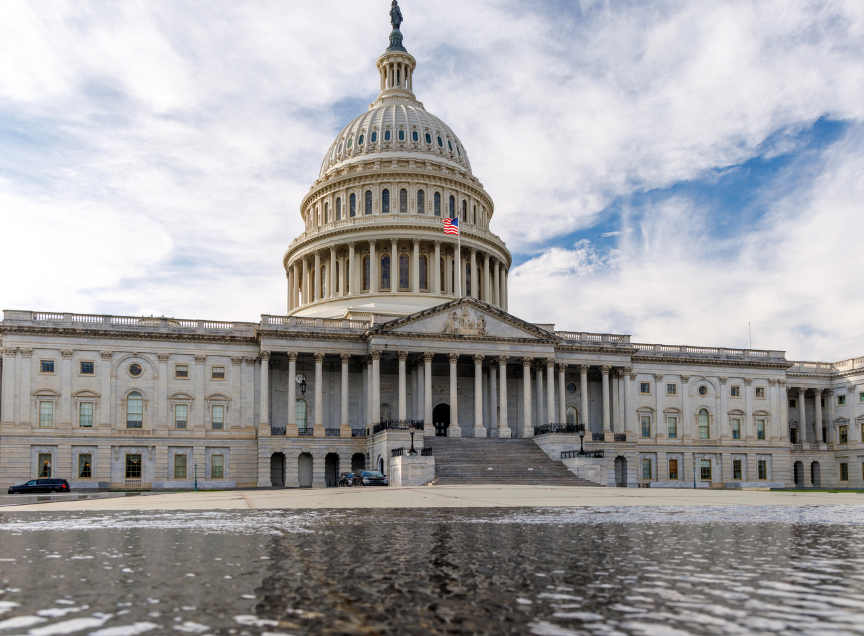

WASHINGTON — Recently, a bipartisan group of former leaders of America’s major agricultural associations, farmer leaders, and former USDA officials joined forces to write a letter to Congress about the current state of the agricultural industry in the United States.
In total, 27 former agricultural executives and officials wrote the letter to warn Congress of what they are calling a “potential widespread collapse of American agriculture” at the hands of this current administration. Among the signers of the letter included past presidents of such groups as the National Corn Growers Association, the American Soybean Association, the National Pork Producers Council, the Renewable Fuels Association, as well as several universities and governmental affiliations.
“The policies of this administration have caused tremendous harm to U.S. agriculture,” the group stated. “Farmer bankruptcies have doubled, barely half of all farms will be profitable this year, and the U.S. is running a historic agriculture trade deficit.”
“As advocates for farmers and agribusiness with decades of experience, we know that farmers don’t want government handouts; they want markets,” the authors added. “They want world-class research so that they can compete. They want their families and communities to have affordable health care services.”
The group stressed the fact that the crisis affecting the agricultural industry also impacts the rural economy as a whole.
“When American farmers suffer, the entire rural economy is impacted — from schools, to churches, to main street businesses,” the group added. “We need to honestly acknowledge these impacts rural America and engage in serious deliberations with the farm community to develop real, long-term solutions.”
The authors established multiple factors contributing to the current agricultural crisis, including:
- Increased cost of farm inputs.
- Loss of market access.
- Weakening of international trade partnerships.
- Disruptions to farm labor.
- And cuts to USDA staffing and Ag research.
The group also acknowledged that this crisis is not the only thing impacting farm communities.
“At the same time that farm country is reeling from these blows to agriculture, rural health care cuts are threatening a vital safety net for American farm families,” the authors noted. “Congress needs to assert itself on behalf of farmers if we are to avoid a widespread collapse of American agriculture and our rural communities.”
After identifying the factors that led to this current crisis, the group went into detail about each factor. The increased cost of farm inputs is directly connected to the new tariff policies put in place by this administration. They acknowledge that tariffs have some benefits, but in reality, the current tariffs have done more harm than good to the American farm economy.
“The administration’s tariffs have increased prices for farm inputs and have pushed the cost of production well above commodity prices,” the authors wrote. “While we applaud the recent decision to exempt fertilizer imports from tariffs, we question why the government was ever placing tariffs on fertilizer and ask why the administration has not removed tariffs on all farm inputs.”
In a similar vein, the loss of market access is a direct result of the administration’s trade policies, reducing America’s global competitiveness and disrupting export markets. As examples of this loss of market access, the group mentioned the Trans-Pacific Partnership and the trade war on soybeans.
In 2016, President Trump pulled the U.S. out of the TPP, which the American Farm Bureau estimated would’ve increased farm exports by $4.4 billion per year. At the time, farmers accepted the loss because they assumed the profits would be made up with a new trade deal with other countries. However, nothing of the sort has come to fruition, the group added.
As for the trade war on soybeans, “in 2018, when the China tariffs were initially imposed, whole U.S. soybean exports represented 47 percent of the world market,” the authors explained. “Today, whole U.S. soybeans represent just 24.4 percent, a 50 percent reduction in market share.”
“The U.S. is simply no longer viewed as a reliable supplier,” the authors added. “[Aggressive] rhetoric and chaotic trade policies have caused our traditional trading partners to question the reliability of the U.S. as a trading partner and to turn to other countries to stabilize international trade.”
Despite all of the negatives, the authors also mention the one significant agricultural highlight during Trump’s first term, the negotiation and passage of the U.S.-Mexico-Canada Agreement in 2018. The USMCA originally had overwhelming bipartisan support, but recent comments by representatives of this administration have created doubt about the future of the agreement.
Another hot button issue in the country is securing the border, and the authors explained how something so important to this administration is negatively affecting farmers.
“Mass deportations, removal of protected status, and failure to reform the H-2A visa program are wreaking havoc with dairy, fruit and produce, and meat processing,” the group stated. “Farmers need these workers.”
The lack of workers is causing food costs to go up for consumers and putting economic pressure on food and agriculture businesses.
The cuts to USDA staffing are preventing farmers from accessing the full extent of USDA services. Also, the severe decline of USDA research and funds for colleges and universities is providing additional problems.
“Farmers can’t get payments in a timely fashion or the assistance they previously received,” the authors wrote. “Moreover, dramatic reductions in USDA research and funds to land grant colleges are…threatening the long-term competitiveness of U.S. agriculture.”
The bipartisan group concluded the letter by asking Congress to take some specific actions to rectify the current crisis. Those actions include:
- Immediately exempt all farm inputs from tariffs.
- Repeal tariffs that are disrupting agriculture export markets.
- Pass Trade Promotion Authority to enable the administration to pursue and secure meaningful, enforceable, free trade agreements that can be passed by Congress and have the full force and effect of law.
- Direct the administration to prioritize the negotiation of binding trade agreements with countries that need our agricultural products and that can help offset other market disruptions.
- Encourage the administration to expeditiously complete the review of the U.S.-Mexico-Canada Agreement, and ensure that the USMCA is extended for the next 16 years.
- Pass a new farm bill.
- Pass farm labor reform, including reform to the H-2A program.
- Restore funding for land-grant agricultural research and critical USDA staffing.
In addition to these actions, the authors encourage members of Congress, state departments of agriculture, and agricultural associations to hold meetings with farmers to better understand what they need, as they will be doing the same.
“Hearing directly from farmers about the state of the farm economy, the causes of our current farm crisis, and the policy changes that are needed is a critical first step in restoring the short-term economic health and long-term competitiveness of U.S. agriculture,” the authors noted.
