

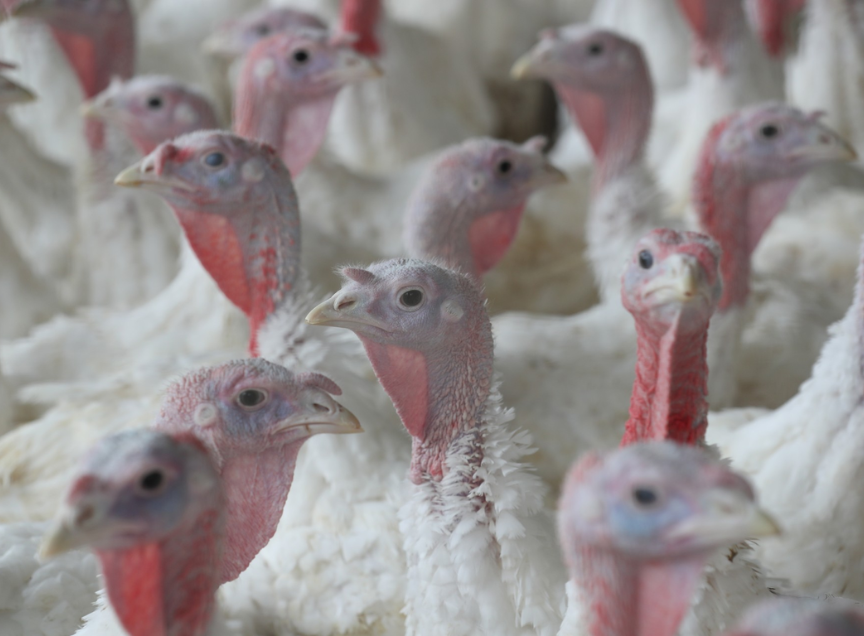

BISMARCK, N.D. — After a fairly quiet summer of highly pathogenic avian influenza outbreaks, the North Dakota Department of Agriculture confirms the presence of HPAI in a Dickey County, N.D., commercial turkey flock.
The results were confirmed by the South Dakota State University Animal Disease Research and Diagnostic Laboratory on Aug. 30. Dickey County is in southern North Dakota and is adjacent to the northern border of South Dakota. Approximately 60,000 commercial turkeys were impacted by this outbreak.
“After a quiet summer, it’s not unexpected that we have another case of HPAI as birds are gathering to begin the fall migration,” Doug Goehring, N.D. agriculture commissioner, said in an announcement. “Protecting our North Dakota producers, who raise approximately 1 million commercial birds annually, and our many backyard bird owners is high priority.”
The NDDA and the N.D. State Board of Animal Health are working closely with the USDA’s Animal and Plant Health Inspection Service in monitoring and testing in what is now the quarantined response zone. Per protocol the birds have been depopulated to prevent further spread.
“Domestic birds in a 10 km control zone around the affected farm are being contacted and monitored to help prevent the spread of HPAI. Birds from the flock will not enter the food system,” the NDDA said. “The detection triggers the suspension of commingling poultry/bird events both in Dickey County and birds from Dickey County. If no new cases emerge in 30 days, the suspension will be automatically lifted for that county.”
This commercial turkey flock outbreak in North Dakota is the first occurrence in the state since a May 2025 confirmation in a backyard mixed flock in Kidder County, and an April 2025 backyard chicken flock in Stutsman County.
It’s still early in the fall wild bird migration season, and Dr. Ethan Andress, N.D. state veterinarian, has noted that large waterfowl flocks are not yet migrating over the Dakotas, so this may indicate a spread from a local waterfowl source.
“The HPAI virus continues to circulate in wild birds,” Andress said in a statement. “Waterfowl continue to be the primary concern, but any wild birds can potentially spread the virus.”
“Remember to restrict access to property, keep wild birds away from other birds and practice enhanced biosecurity,” Andress added. “Birds should be kept indoors, especially during the spring and fall migration.”
Health officials continue to emphasize that immediate threats to public health remain low.
APHIS reported on Sept. 3 that for the previous 30 days there have been just this one commercial outbreak, and 2 backyard flock outbreaks, impacting about 60,000 birds.
